
Kirtan Sangit — Pakhawaj in Devotional Music Traditions
Published: July 2026 · By Dr. Ankit Parikh · 9 min read
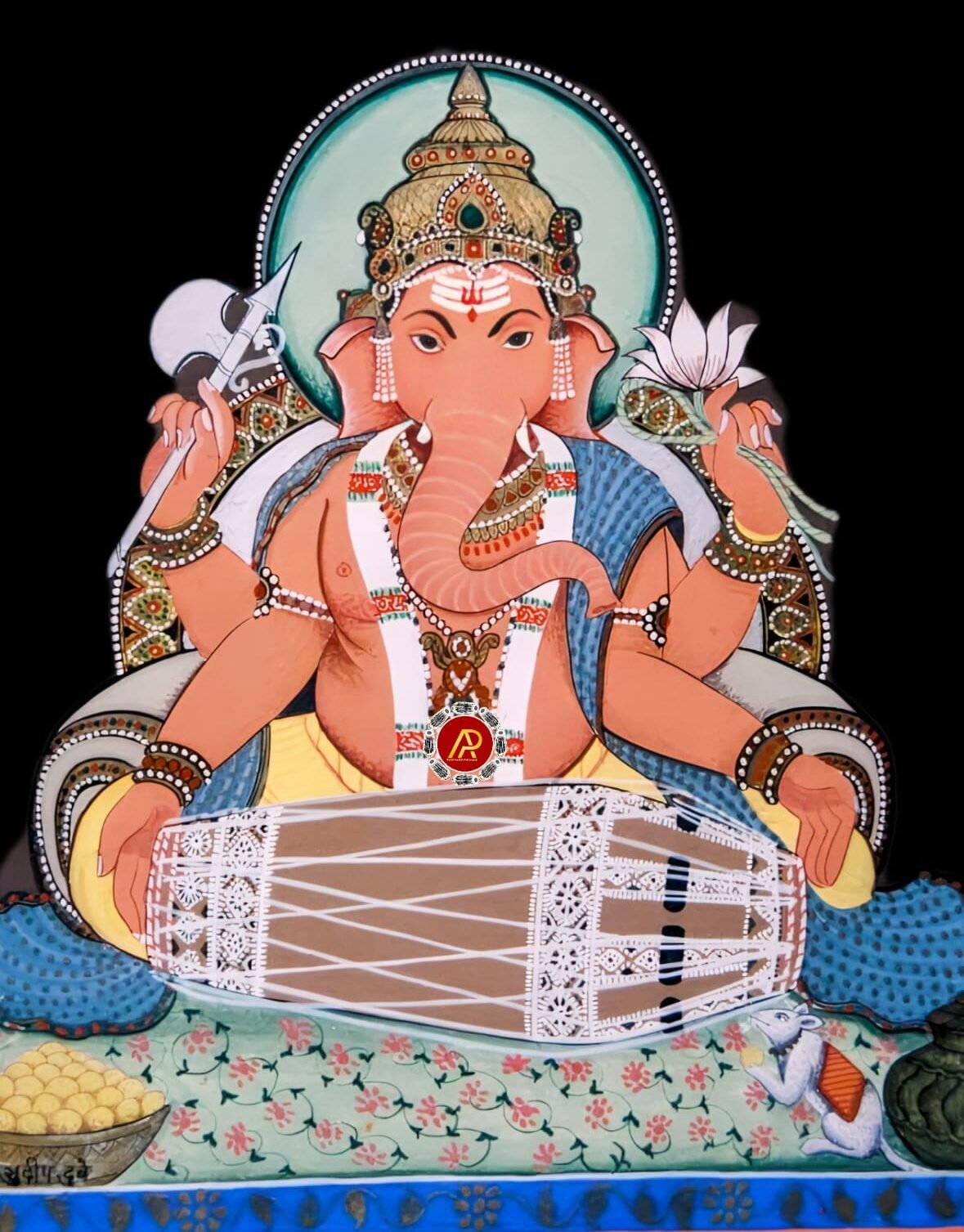
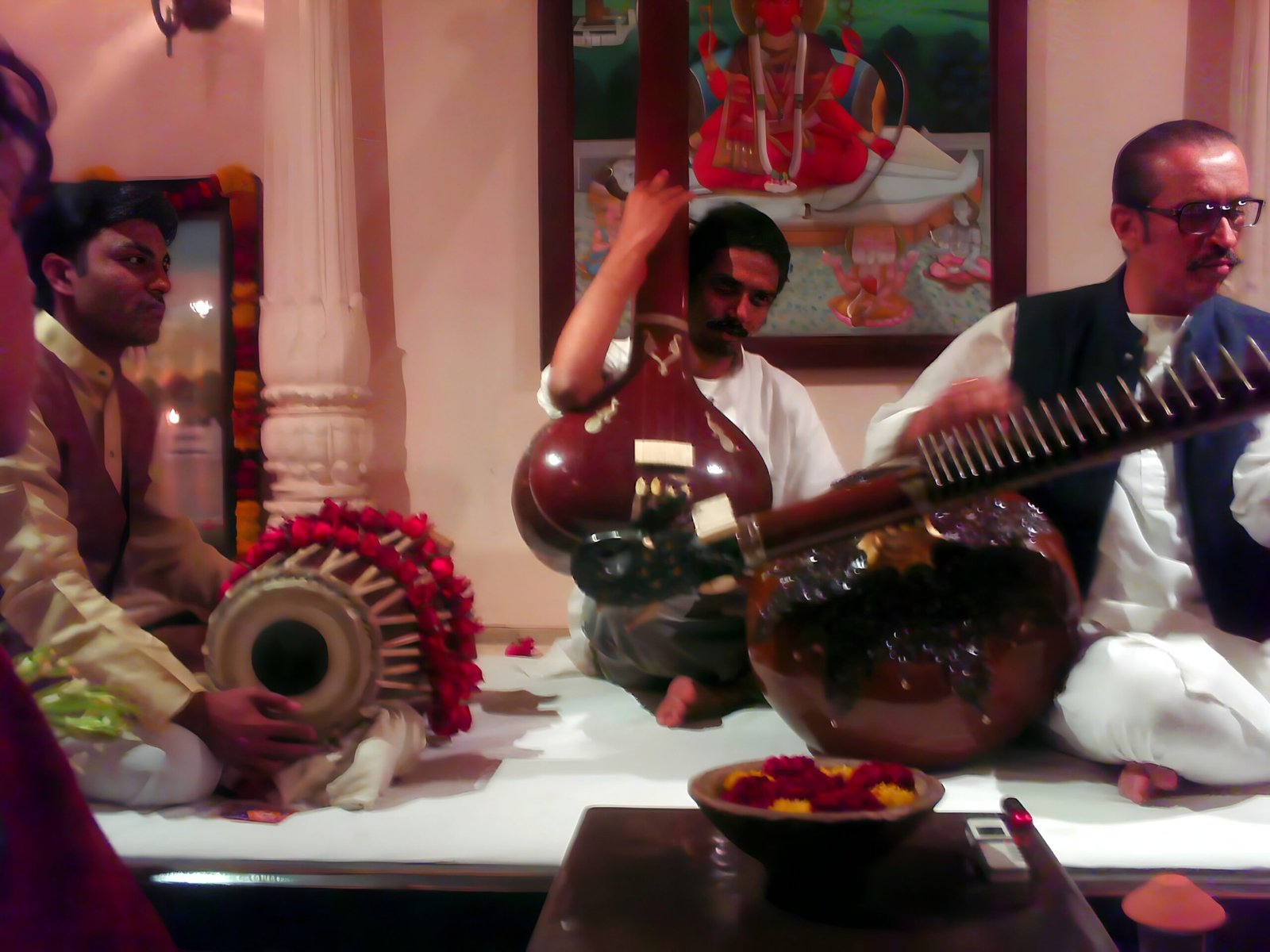
Long before the concert hall, before the recording studio, and before the music festival, there was Kirtan — the devotional singing of God’s name in temples, courtyards, and gathering spaces. And at the heart of this ancient tradition stood the Pakhawaj, providing the rhythmic pulse that carried voices upward in prayer.
Kirtan Sangit — the musical tradition of devotional singing — is one of the oldest and most widespread forms of music in India. From the Pushtimarg temples of Nathdwara to the ISKCON centers of the modern world, from the Vaishnavite traditions of Bengal to the Nath sampradaya of Rajasthan, Kirtan has been the people’s music — accessible, participatory, and deeply spiritual.
The Pakhawaj plays a central role in this tradition, yet it is rarely discussed in the context of Kirtan. This article explores the Pakhawaj’s place in devotional music, the different traditions of Kirtan Sangit, and how this ancient practice continues to evolve.
What is Kirtan Sangit?
Kirtan is a form of devotional singing where the name of God — or sacred verses from scriptures — is sung in a call-and-response format. A leader sings a line, and the congregation repeats it. The music builds gradually, with increasing tempo and energy, creating a meditative and ecstatic state.
The term “Sangit” simply means “music.” So “Kirtan Sangit” refers to the musical tradition of Kirtan — the ragas, talas, compositions, and performance practices that structure this devotional singing.
Kirtan Sangit is not a single tradition. It encompasses multiple lineages and styles, each with its own repertoire and aesthetic:
- Pushtimargiya Kirtan — The Kirtan tradition of the Pushtimarg, with sophisticated compositions in various ragas and talas
- Nam Sankirtan — Congregational chanting of God’s name, popular in Bengal and across India
- Haveli Kirtan — Temple-based Kirtan performed in Havelis, specifically in the Nathdwara tradition
- Kathak Kirtan — Kirtan accompanied by storytelling from the Puranas and scriptures
- Bhajan Kirtan — Simpler devotional singing, often with harmonium and tabla accompaniment
The Pakhawaj in Kirtan Tradition
In the Kirtan traditions that use the Pakhawaj, the instrument serves a unique function. Unlike concert accompaniment, where the Pakhawaj interacts with a single vocalist, in Kirtan it supports an entire congregation. This requires different skills and a different approach.
1. Maintaining the Pulse
In Kirtan, the most important job of the Pakhawaj is to maintain a steady, reliable pulse. The congregation — many of whom may not be trained musicians — needs a clear rhythmic foundation to follow. The Pakhawaj player provides this foundation with consistent, clear thekas that everyone can follow.
2. Building Energy
Kirtan traditionally builds in tempo and intensity. The Pakhawaj player must guide this progression — starting slow and meditative, gradually increasing speed and complexity, and reaching a climactic peak before returning to calm. This arc of energy is central to the Kirtan experience.
3. Supporting the Leader
The Kirtan leader (often a priest or a trained musician) sets the melody and mood. The Pakhawaj player must support this leader while also guiding the congregation. This dual role — supporting and leading simultaneously — is one of the unique challenges of Kirtan accompaniment.
4. Devotional Atmosphere
In Kirtan, the Pakhawaj is not just providing rhythm — it is creating atmosphere. The deep, resonant bass tones and the crisp treble strokes combine to create a sonic environment that supports meditation and devotion. This requires a sensitivity to the devotional mood that goes beyond technical proficiency.
Pushtimargiya Kirtan — The Sophisticated Tradition
The Pushtimarg tradition has perhaps the most developed and sophisticated Kirtan Sangit tradition in India. Developed over centuries in the temples of Nathdwara, Mathura, and Vrindavan, this tradition combines the devotional depth of Bhakti with the musical sophistication of classical music.
Characteristics of Pushtimargiya Kirtan
- Raga-based — Each Kirtan is set in a specific raga, with attention to raga grammar and aesthetic
- Tala variety — Uses a wide range of talas, from simple Teentaal to complex Chautaal and Jhaptaal
- Seasonal and time-based — Different Kirtans are prescribed for different times of day and seasons
- Lyrical depth — The lyrics are often by great poets-saints, describing the divine play of Krishna
- Pakhawaj-centric — The Pakhawaj is the primary percussion instrument, not the Tabla
The Ashtayam Kirtan Cycle
In the Pushtimarg tradition, the day is divided into eight periods (Ashtayam), each with its own set of Kirtans. The Pakhawaj player must know the specific Kirtans for each period and be prepared to play them at the appropriate time. This daily cycle of Kirtan is the backbone of temple life in Pushtimarg.
The eight periods and their musical characteristics:
- Praatar (Morning) — Gentle, awakening ragas
- Shringar (Adornment) — Ornamental, beautiful ragas
- Rajbhog (Midday) — Grand, celebratory ragas
- Sayan (Afternoon) — Relaxed, pleasant ragas
- Utan (Evening return) — Welcoming, warm ragas
- Aarti (Evening worship) — Devotional, powerful ragas
- Shayan (Night) — Meditative, slow ragas
- Ardhratri (Midnight) — Deep, contemplative ragas
Kirtan Sangit Compositions for Pakhawaj
The Pakhawaj repertoire in Kirtan Sangit includes specific compositions and patterns that are unique to this tradition:
Theka Patterns
Each tala used in Kirtan has specific theka patterns that are simpler and more repetitive than Dhrupad patterns. The focus is on clarity and consistency rather than complexity.
Mukhra Patterns
Mukhras (rhythmic phrases that mark structural points) are crucial in Kirtan. They help the congregation know when a section is ending and the sum is approaching.
Tihai Compositions
Kirtan Tihais tend to be simpler and more predictable than Dhrupad Tihais. Their purpose is to create a satisfying conclusion that the congregation can anticipate and enjoy.
Tempo Variations
The Pakhawaj player must master gradual tempo changes — the slow-to-fast progression that is central to the Kirtan experience. This requires precise internal timing and the ability to lead a group through tempo transitions.
The Spiritual Dimension of Kirtan Pakhawaj
Playing Pakhawaj in Kirtan is not just a musical activity — it is a spiritual practice. The Pakhawaj player participates in the devotional act, and their playing is itself a form of prayer.
This spiritual dimension requires:
- Bhakti (devotion) — The player must approach the instrument with reverence
- Seva (service) — The playing is offered to the deity, not performed for personal glory
- Humility — The Pakhawaj player supports the congregation, never overpowering
- Patience — Kirtan can last for hours; the player must maintain presence throughout
- Sensitivity — The devotional mood must be respected and enhanced, never disrupted
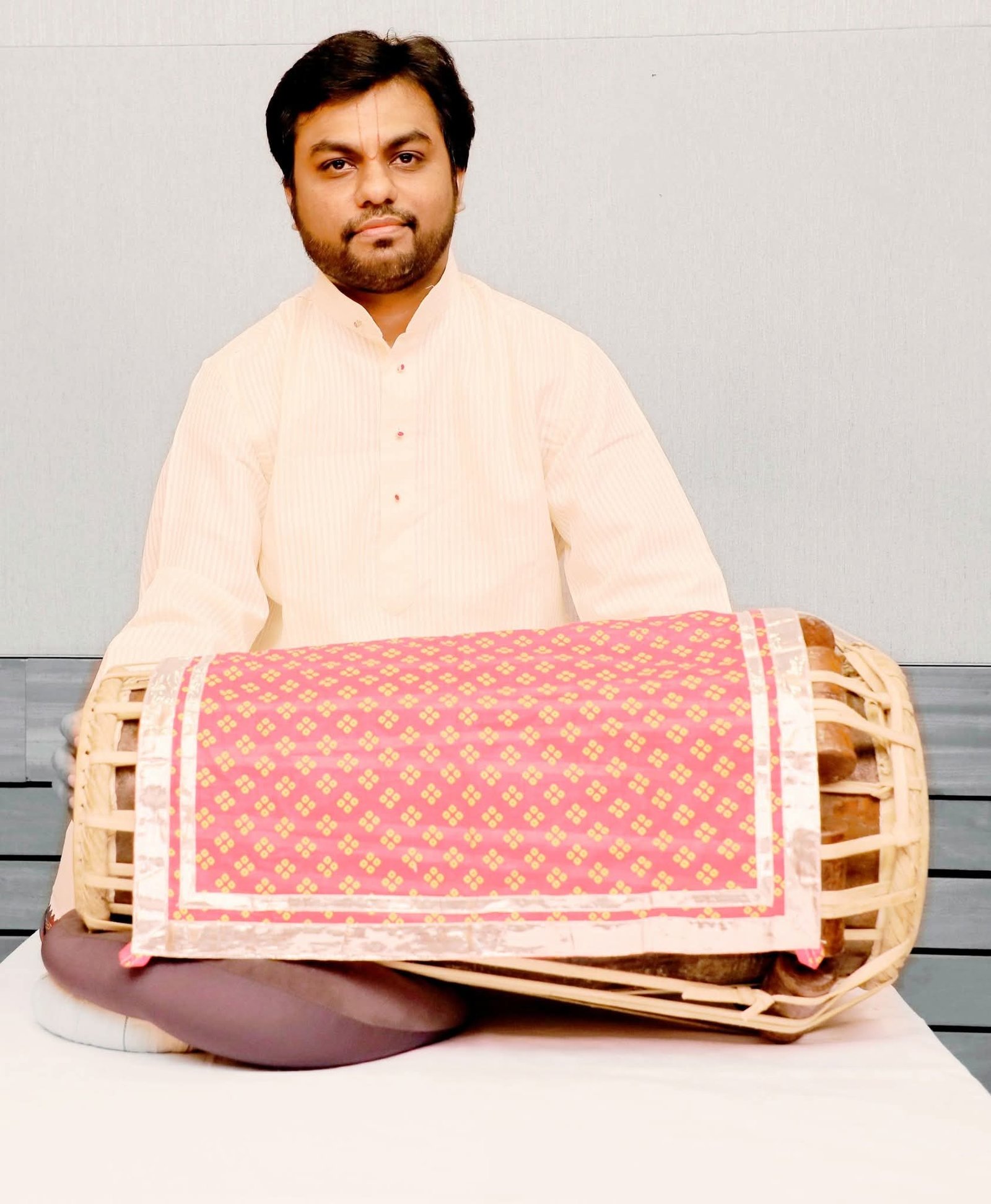
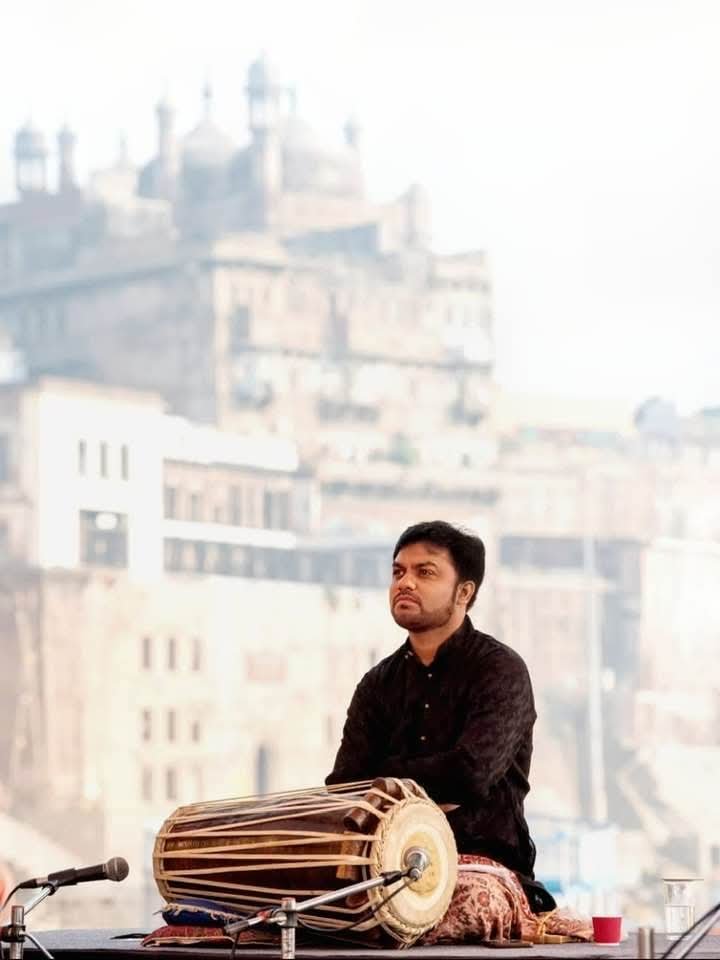
Dr. Ankit Parikh — Kirtan Sangit Heritage
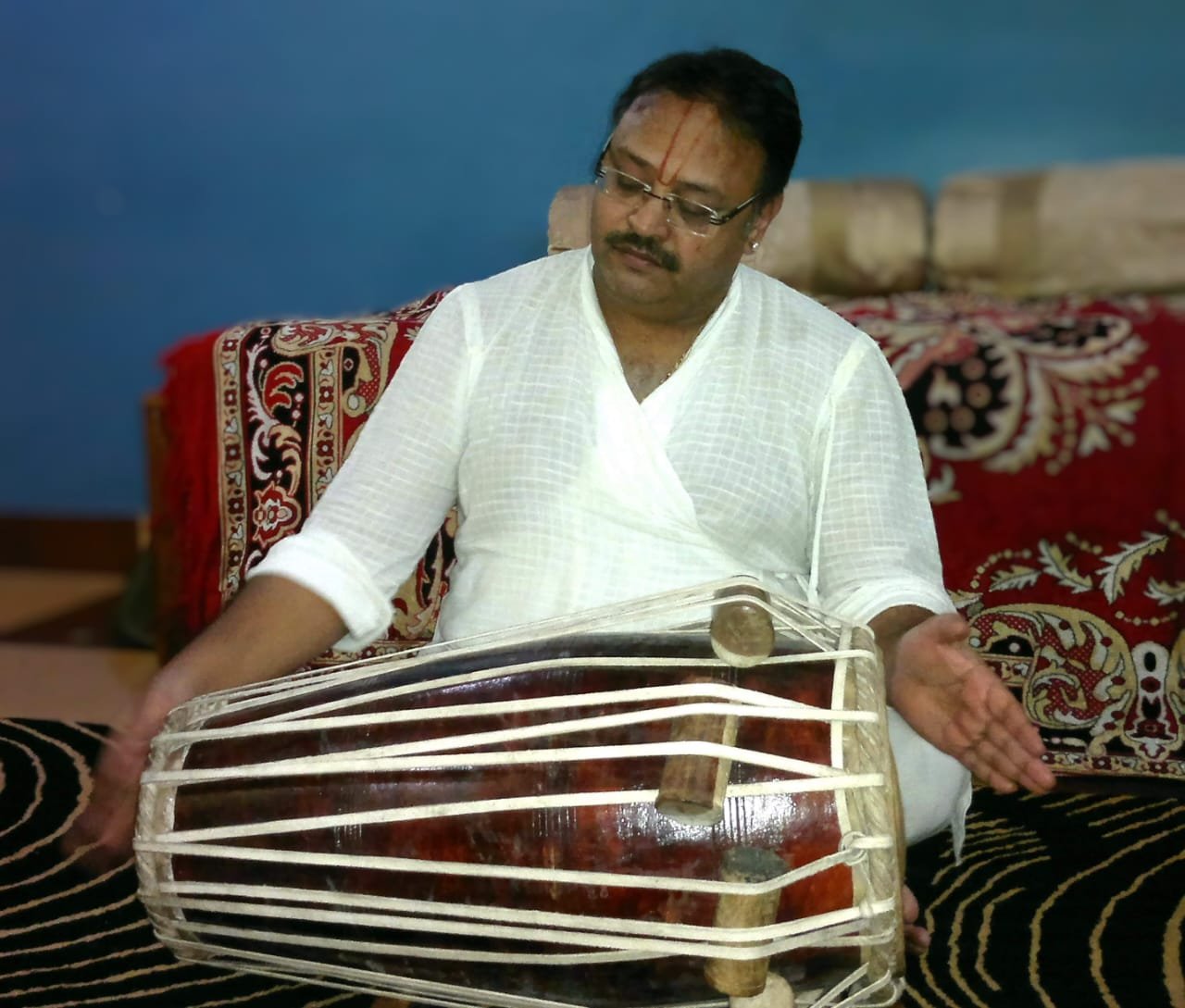
Dr. Ankit Parikh carries a rare heritage in Kirtan Sangit. His Guru, H.H. Goswami Shri Kalyan Rai ji Maharaj, is an Acharya of the Vallabh Sampradaya and a direct descendant of Sri Vallabhacharya. This means Ankit’s training is not just in the musical technique of Kirtan but in its spiritual and philosophical foundations.
Direct Lineage
Ankit learned Kirtan Pakhawaj from Maharajshri himself, who learned the tradition by playing in the temple from childhood. This direct, unbroken transmission gives Ankit access to compositions, techniques, and spiritual insights that are not available elsewhere.
Daily Practice
Based in Mathura — the heart of Pushtimarg — Ankit is immersed in the daily Kirtan tradition. He performs in temples and participates in the Ashtayam cycle, maintaining a living connection to this ancient practice.
Teaching Kirtan Sangit
In his teaching program, Dr. Parikh offers specialized training in Kirtan Sangit for:
- Temple musicians seeking to learn or improve their Pakhawaj playing
- Pakhawaj players interested in devotional music traditions
- Pushtimarg practitioners wanting to understand the musical tradition
- Anyone drawn to the spiritual dimension of Indian classical music
Kirtan in the Modern World
Kirtan has gained global popularity through organizations like ISKCON (Hare Krishna movement) and through the broader wellness and meditation movement. However, the traditional Kirtan Sangit of the Pushtimarg and other established traditions remains less known.
This presents an opportunity: as more people discover Kirtan, there is a growing need for musicians who understand the authentic, traditional approach. A Pakhawaj player trained in Kirtan Sangit can serve temples, cultural institutions, and devotional gatherings worldwide.
Opportunities for Kirtan Pakhawaj Players
- Temple accompaniment — Daily Kirtan in Pushtimarg and other Vaishnavite temples
- Cultural events — Kirtan performances at cultural festivals and institutions
- Spiritual retreats — Accompaniment at meditation and spiritual retreat centers
- Private gatherings — Kirtan sessions for devotees and spiritual seekers
- International opportunities — Temples and cultural centers outside India
Frequently Asked Questions
What is the difference between Kirtan and Bhajan?
Bhajan is a general term for devotional song. Kirtan specifically refers to the call-and-response format where a leader sings and the congregation repeats. Kirtan Sangit is the musical tradition that structures these Kirtans with specific ragas and talas.
Do I need to be a Pushtimarg practitioner to learn Kirtan Pakhawaj?
No. While knowledge of Pushtimarg enhances the experience, anyone with respect for the tradition and genuine interest in devotional music can learn. Dr. Parikh welcomes students from all backgrounds.
How is Kirtan Pakhawaj different from Dhrupad?
Kirtan Pakhawaj is simpler, more repetitive, and focused on supporting congregational singing. Dhrupad is more complex, with elaborate compositions and improvisations. Kirtan serves devotion; Dhrupad serves artistic expression.
Can I learn Kirtan Pakhawaj online?
Yes. The thekas, mukhras, tihais, and tempo techniques can be effectively taught online. The spiritual dimension is cultivated through practice and understanding, which the Guru guides through discussion and demonstration.
Where can I experience authentic Kirtan Sangit?
The primary centers are Nathdwara (Rajasthan), Mathura, Vrindavan, and other Pushtimarg temples. Dr. Parikh can guide students to authentic Kirtan performances and help them understand what they are hearing.
Learn Kirtan Sangit Pakhawaj
If you are drawn to the devotional dimension of Indian classical music and want to learn the Pakhawaj in the context of Kirtan Sangit, Dr. Ankit Parikh offers a rare and authentic training program rooted in the living tradition of the Pushtimarg.
Phone: +91 9696 542226 | Email: a.parikh42@gmail.com