Best Pakhawaj Teacher in India — Learn from Dr. Ankit Parikh
Published: July 2026 · By Dr. Ankit Parikh · 8 min read
The Pakhawaj is one of India’s oldest and most sacred percussion instruments. For centuries, it has been the rhythmic backbone of Dhrupad, Haveli Sangeet, and some of the most profound traditions in Indian classical music. But finding the right teacher — one who carries the authentic lineage and can guide you properly — is not easy.
If you are searching for the best Pakhawaj teacher in India, this guide will help you understand what to look for, why lineage matters, and how online learning has made this ancient art accessible to students worldwide.
Why the Teacher Matters More Than the Instrument
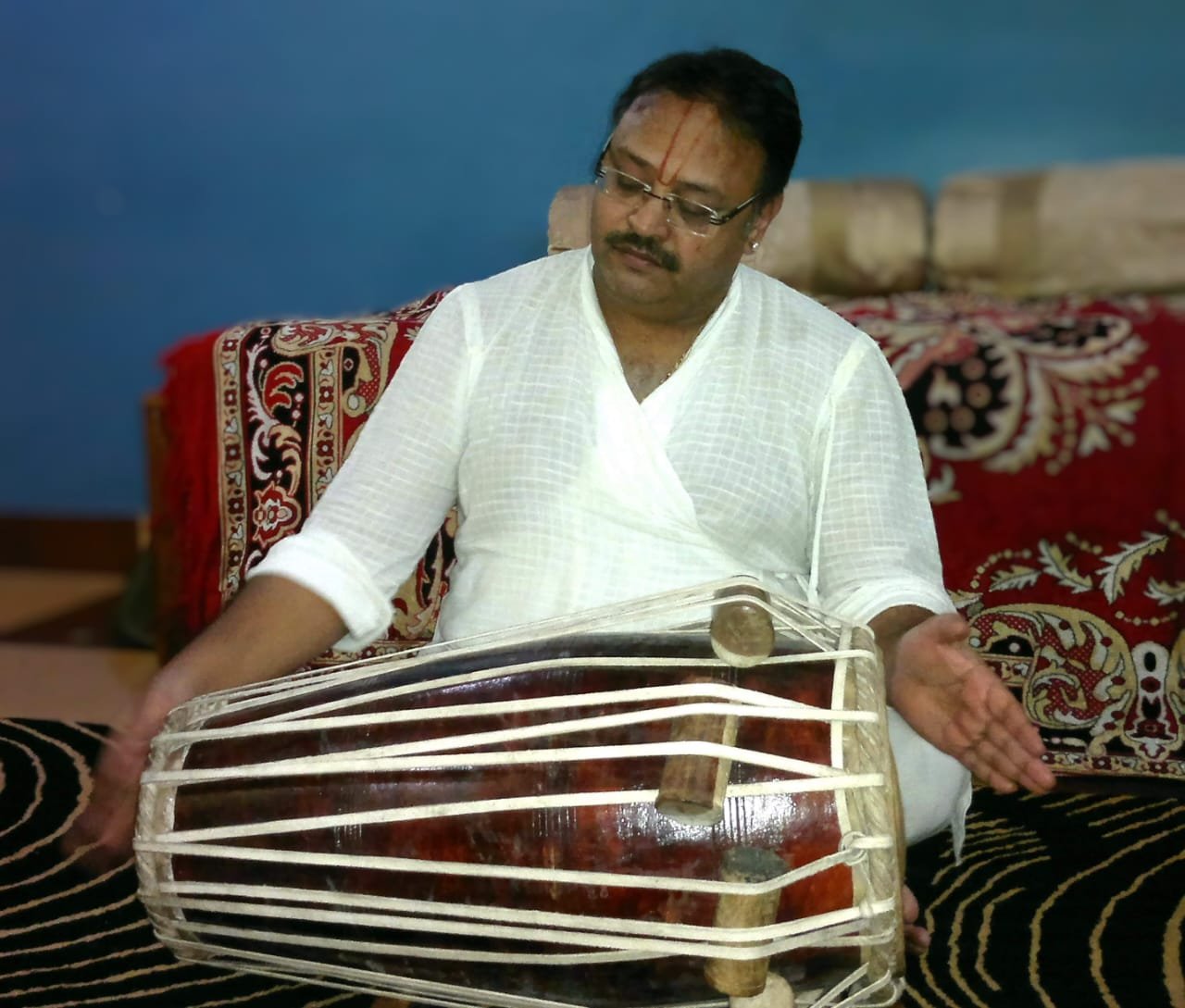
In Indian classical music, the Guru-Shishya Parampara (teacher-student tradition) is not just a teaching method — it is the foundation of the art itself. Unlike Western music education, where you might learn from books or videos, Pakhawaj requires a living connection to the tradition.
A great Pakhawaj teacher does not just show you where to place your hands. They transmit:
- Nikaas — the tonal quality and resonance that defines each stroke
- Bol vocabulary — the language of Pakhawaj, passed down through generations
- Laya sense — the internal feeling of rhythm that cannot be learned from a metronome
- Gharana identity — the specific aesthetic and technical style of your lineage
- Musical context — how to accompany vocalists, instrumentalists, and dancers
Without a qualified teacher, students often develop bad habits that take years to correct. The wrong hand position, incorrect bol pronunciation, or poor understanding of laya can limit your progress permanently.
What Makes a Pakhawaj Teacher “The Best”?
When searching for the best Pakhawaj teacher, look for these qualities:
1. Authentic Gharana Lineage
India has several Pakhawaj Gharanas — Nathdwara, Kudau Singh, Nana Panse, and others. Each has its own distinct style, compositions, and aesthetic. A teacher rooted in a genuine lineage can offer you compositions and techniques that are not available in books or online tutorials.
The Nana Panse Gharana, for example, is known for its incredible speed (Drut), clarity, and crisp sound. The Nathdwara Gharana is celebrated for its devotional depth and Haveli Sangeet repertoire. A teacher connected to these traditions offers something irreplaceable.
2. Performance Experience
A teacher who performs regularly brings real-world musical insights to the classroom. They understand the practical demands of stage performance, accompaniment, and ensemble playing. Ask about their performance history — major festivals, collaborations with renowned artists, and solo recitals.
3. Academic Credentials
While performance experience is essential, academic training ensures the teacher has a structured understanding of theory, history, and pedagogy. A Ph.D. in music, research publications, or university teaching experience indicate a deep scholarly commitment.
4. Teaching Methodology
The best teachers adapt their method to each student. Some students learn best through oral tradition (listening and repeating), while others benefit from notation-based learning. A great teacher knows when to use which approach.
5. Recognition and Awards
Awards from organizations like the Sangeet Natak Akademi, ICCR, or All India Radio (AIR) indicate peer recognition. While awards alone don’t make a teacher, they provide validation of the teacher’s artistic standing.
Dr. Ankit Parikh — A Teacher Rooted in Tradition
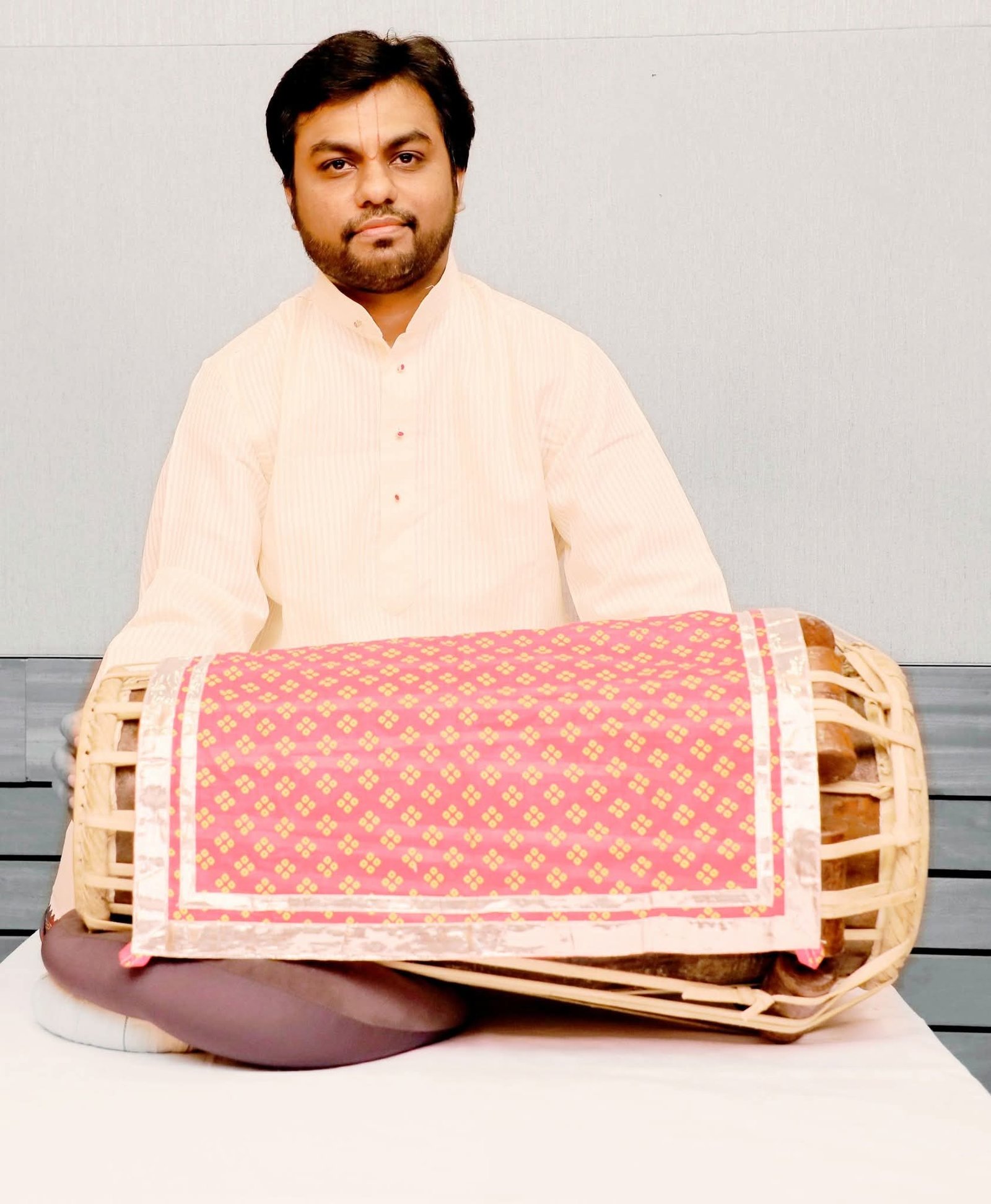
Dr. Ankit Parikh is one of India’s most distinguished Pakhawaj artists and teachers. Born in Varanasi — the spiritual heart of Indian classical music — and currently based in Mathura, he carries forward the traditions of the Nana Panse Gharana.
Lineage and Training
Ankit learned under the guidance of H.H. Goswami Shri Kalyan Rai ji Maharaj, a direct descendant of Sri Vallabhacharya and a master of both the Nana Panse and Nathdwara traditions. He also received training from Mridangacharya Dr. Raj Khushiram, a legendary figure of the Avadhi Gharana.
This dual lineage — combining the technical brilliance of Nana Panse with the devotional depth of Nathdwara — gives Ankit a unique teaching perspective that few teachers can offer.
Academic and Professional Credentials
- Ph.D. in Music (Pakhawaj) from Banaras Hindu University
- Graded Artist — All India Radio (AIR) and Doordarshan
- ICCR Empanelled Artist — Indian Council for Cultural Relations
- NET JRF — University Grants Commission
- Junior Research Fellowship — Ministry of Culture
Performance History
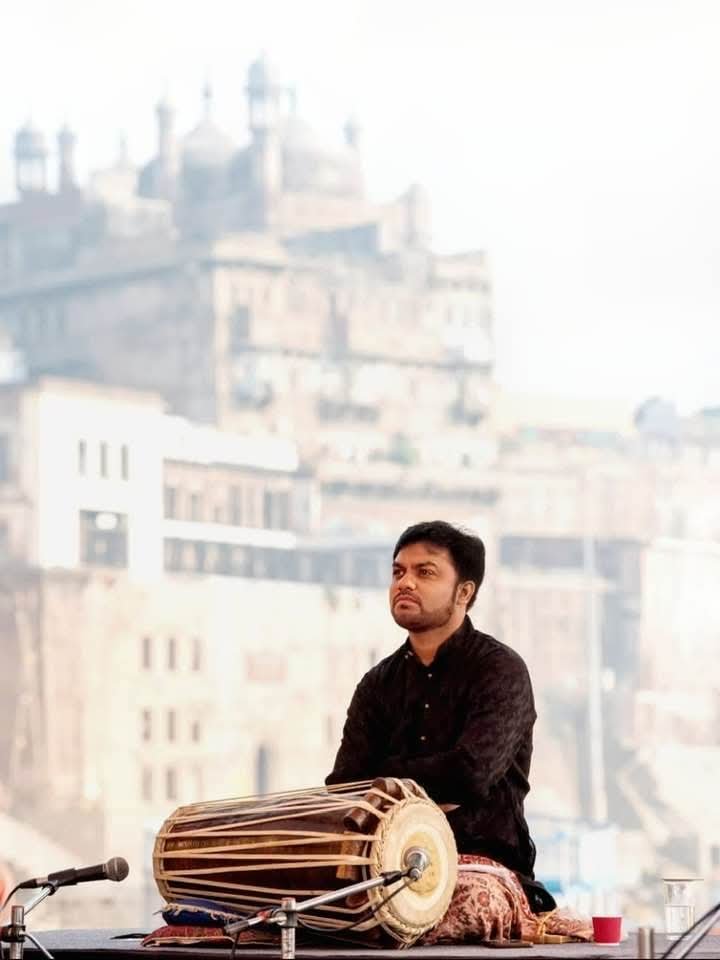
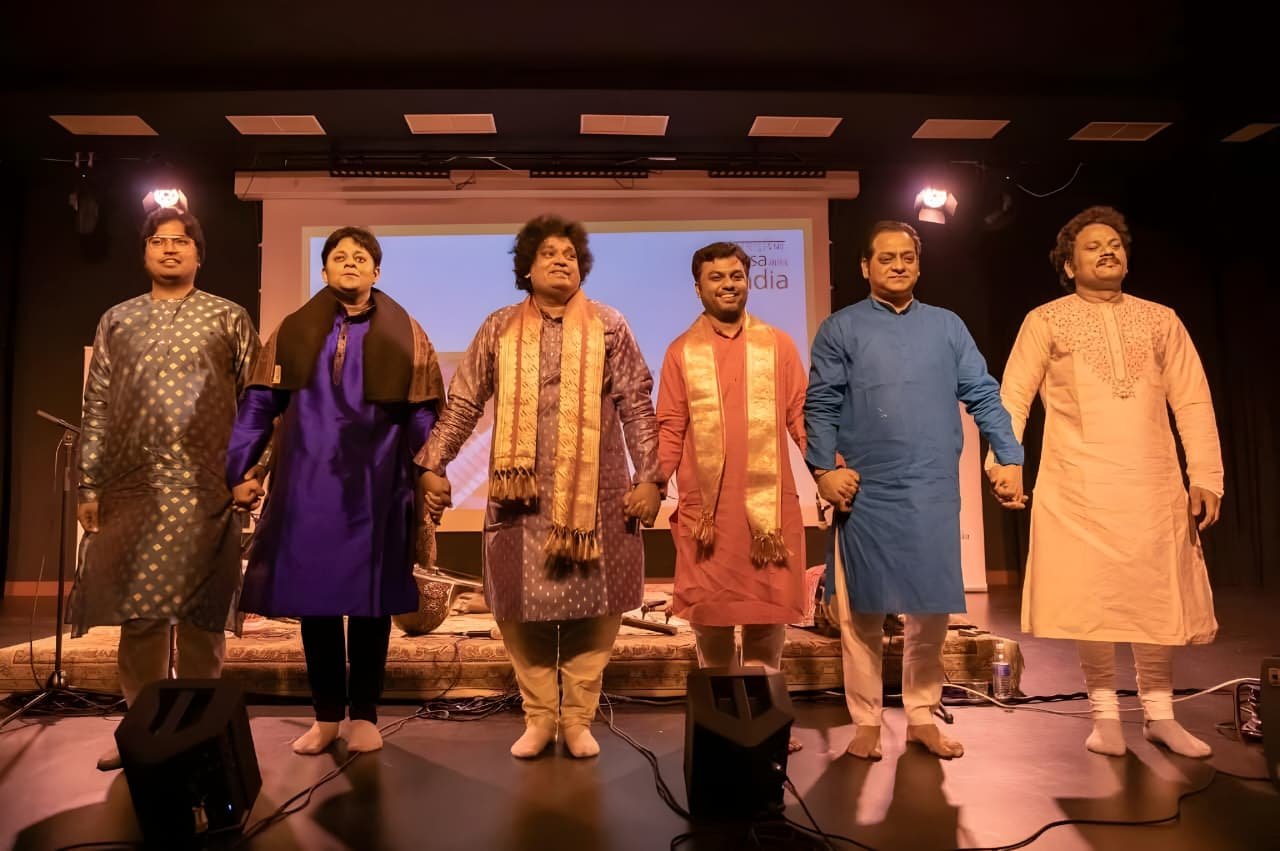
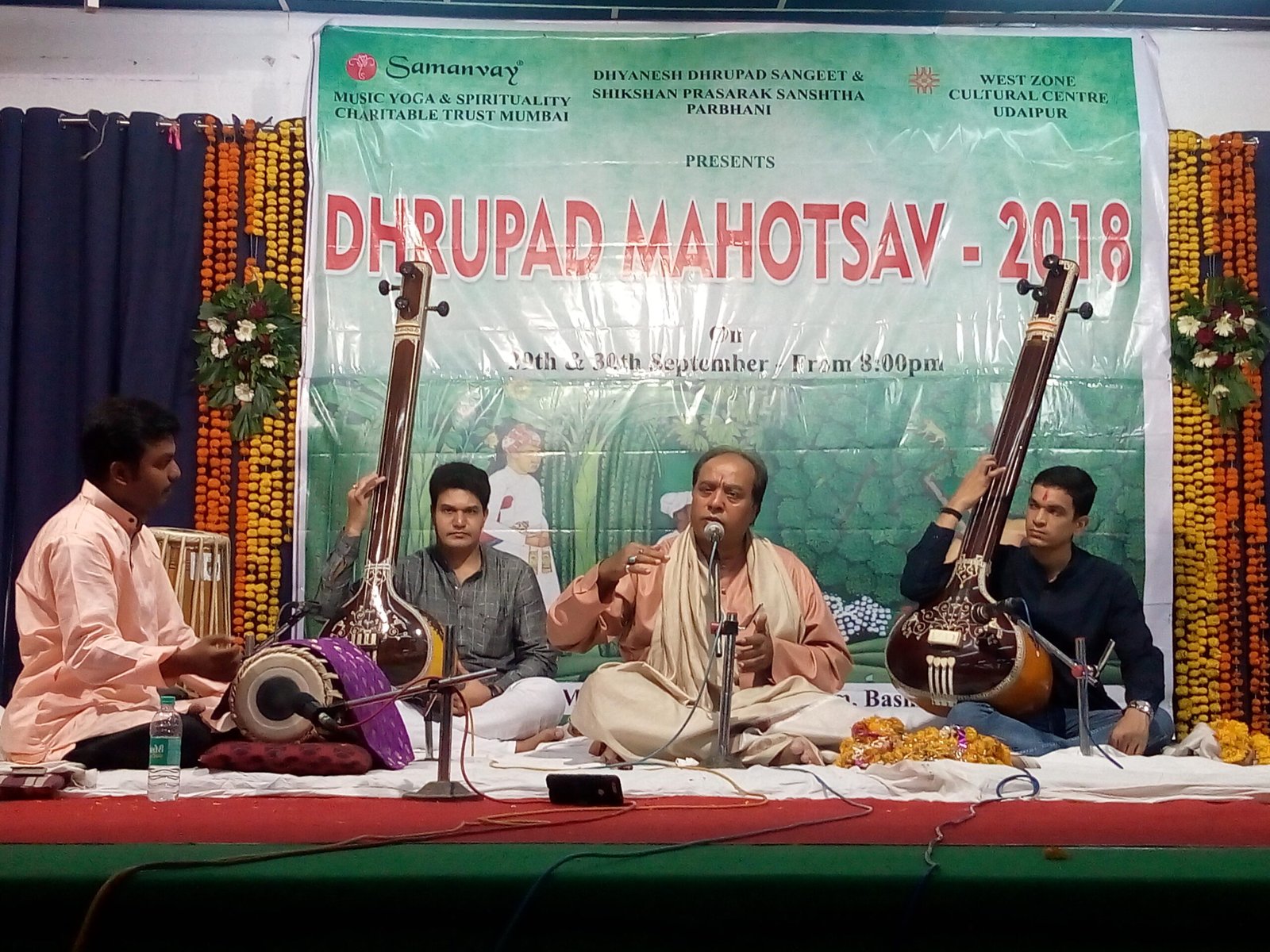
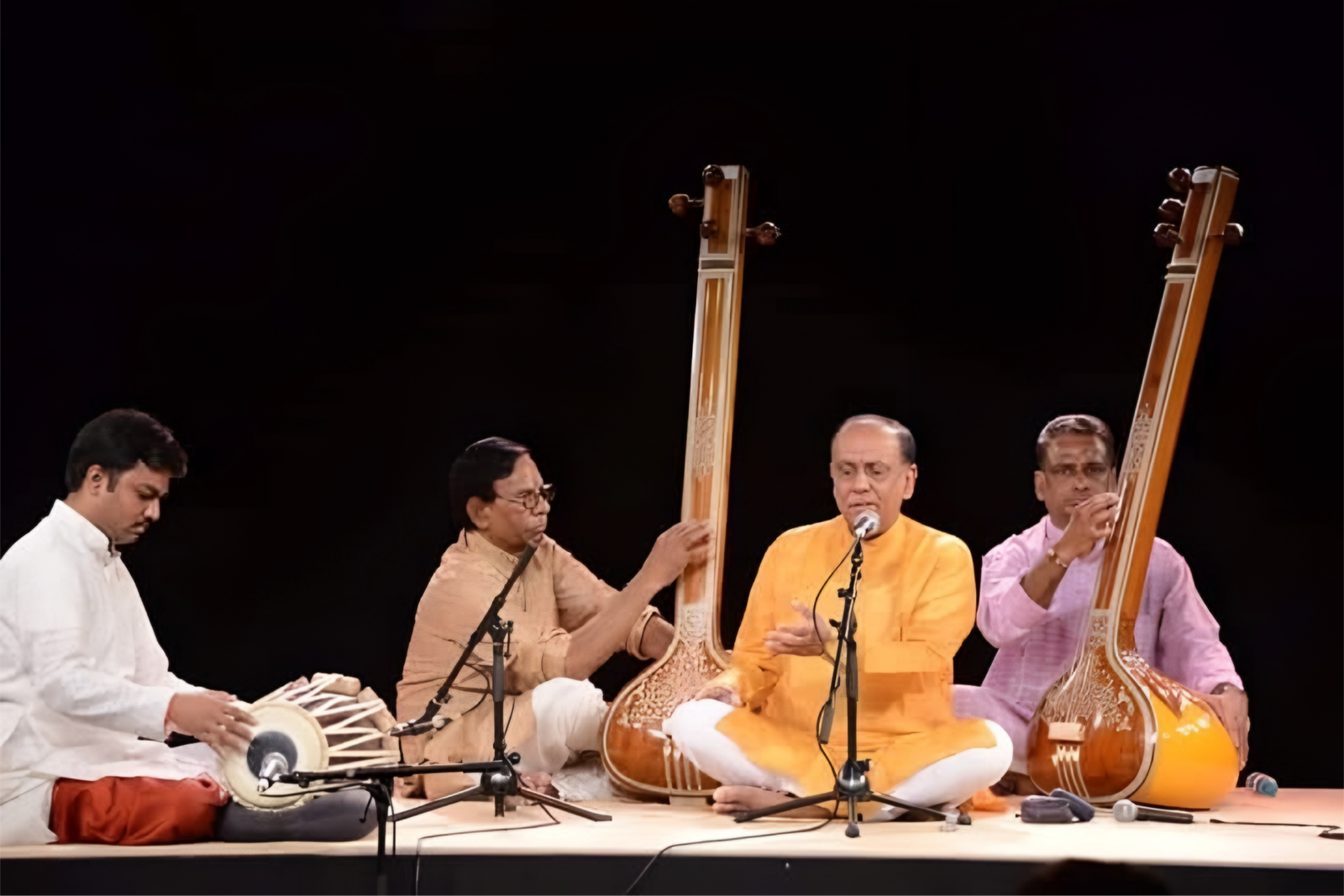
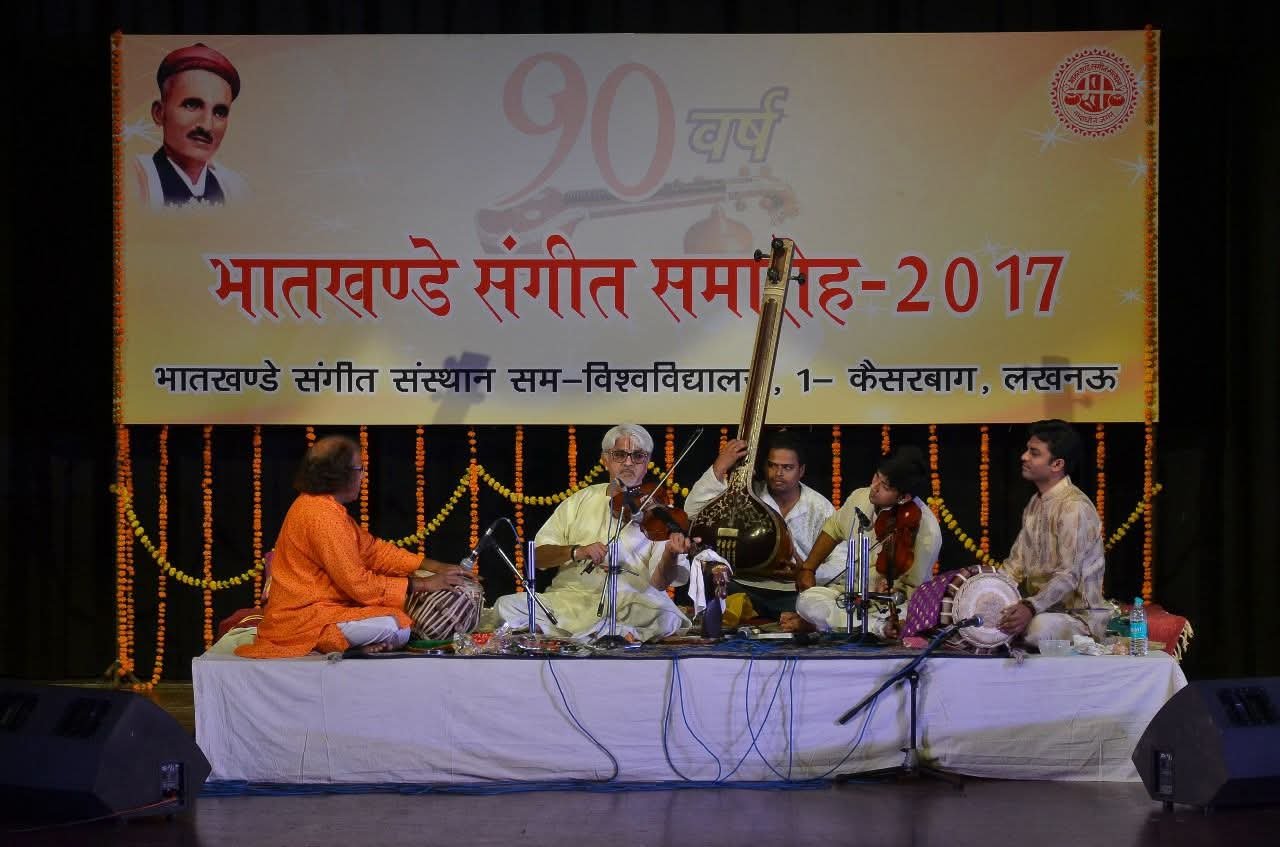
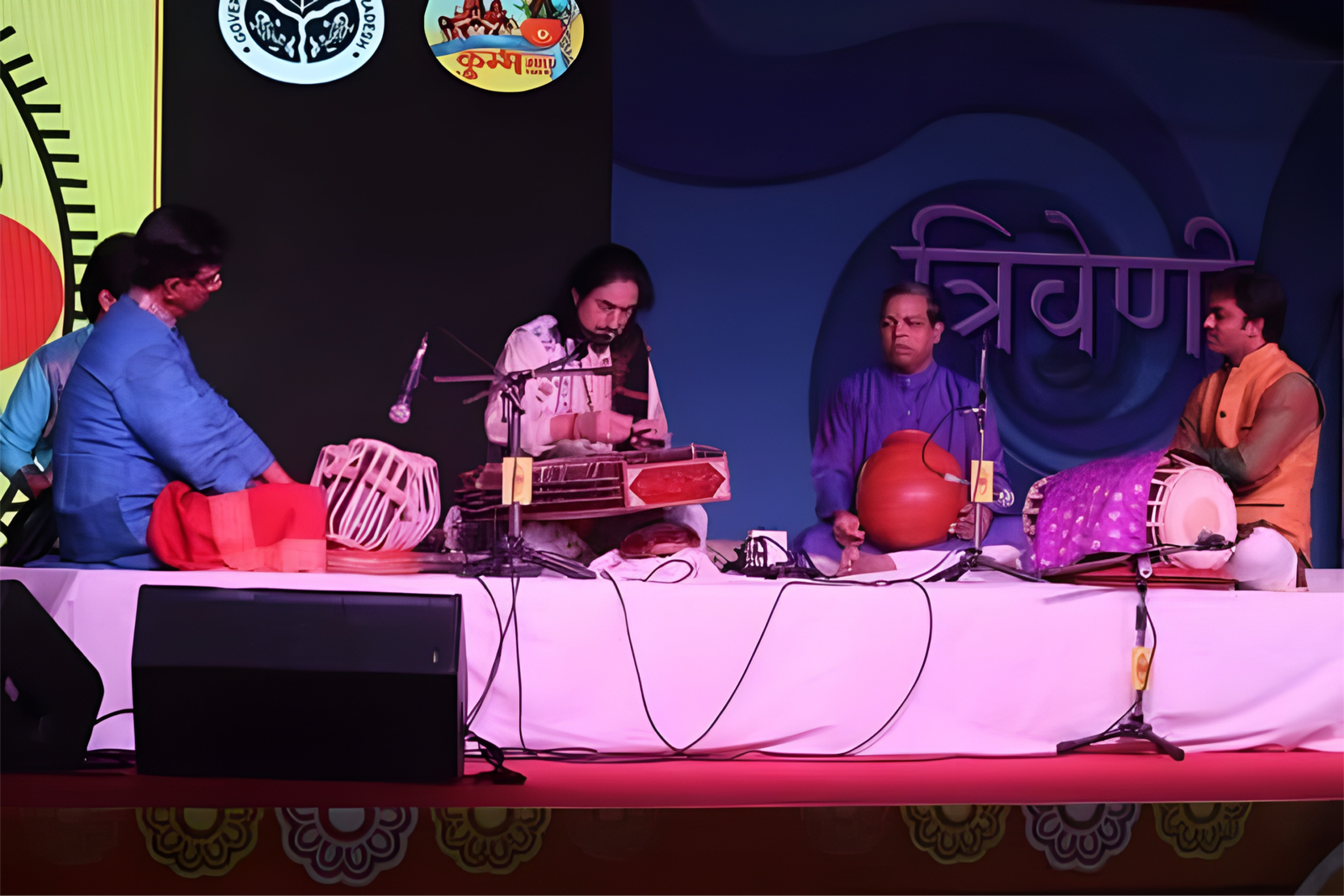
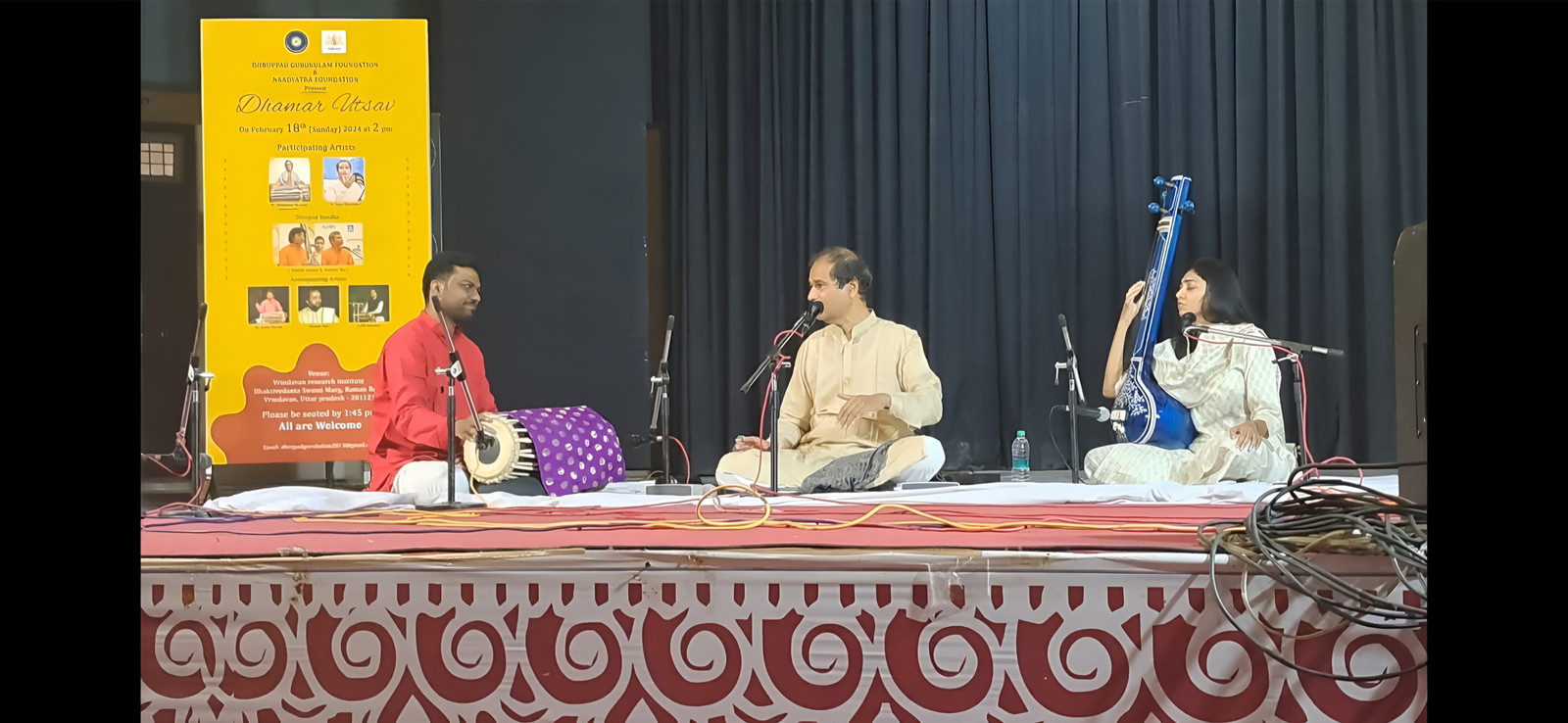
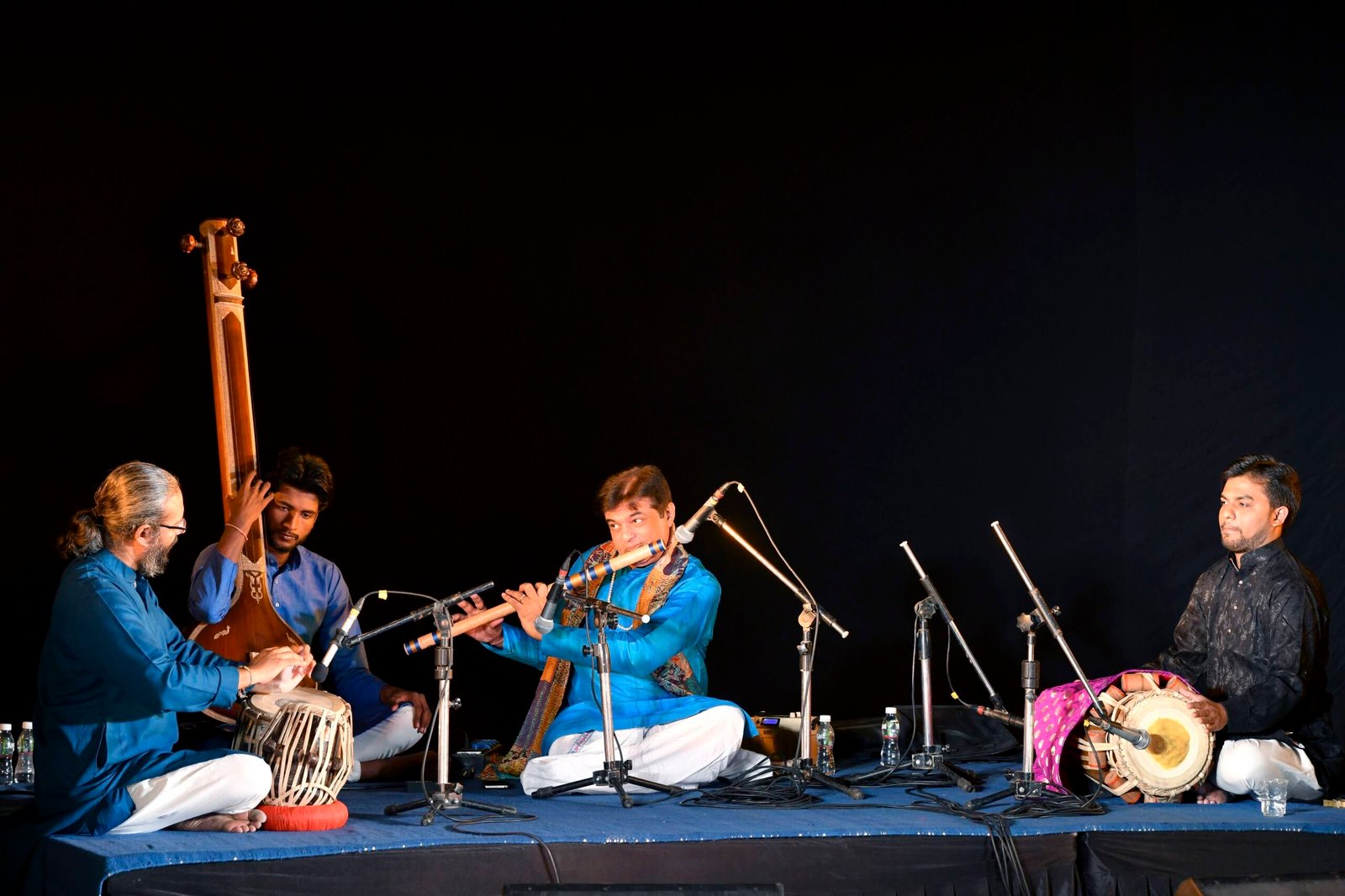
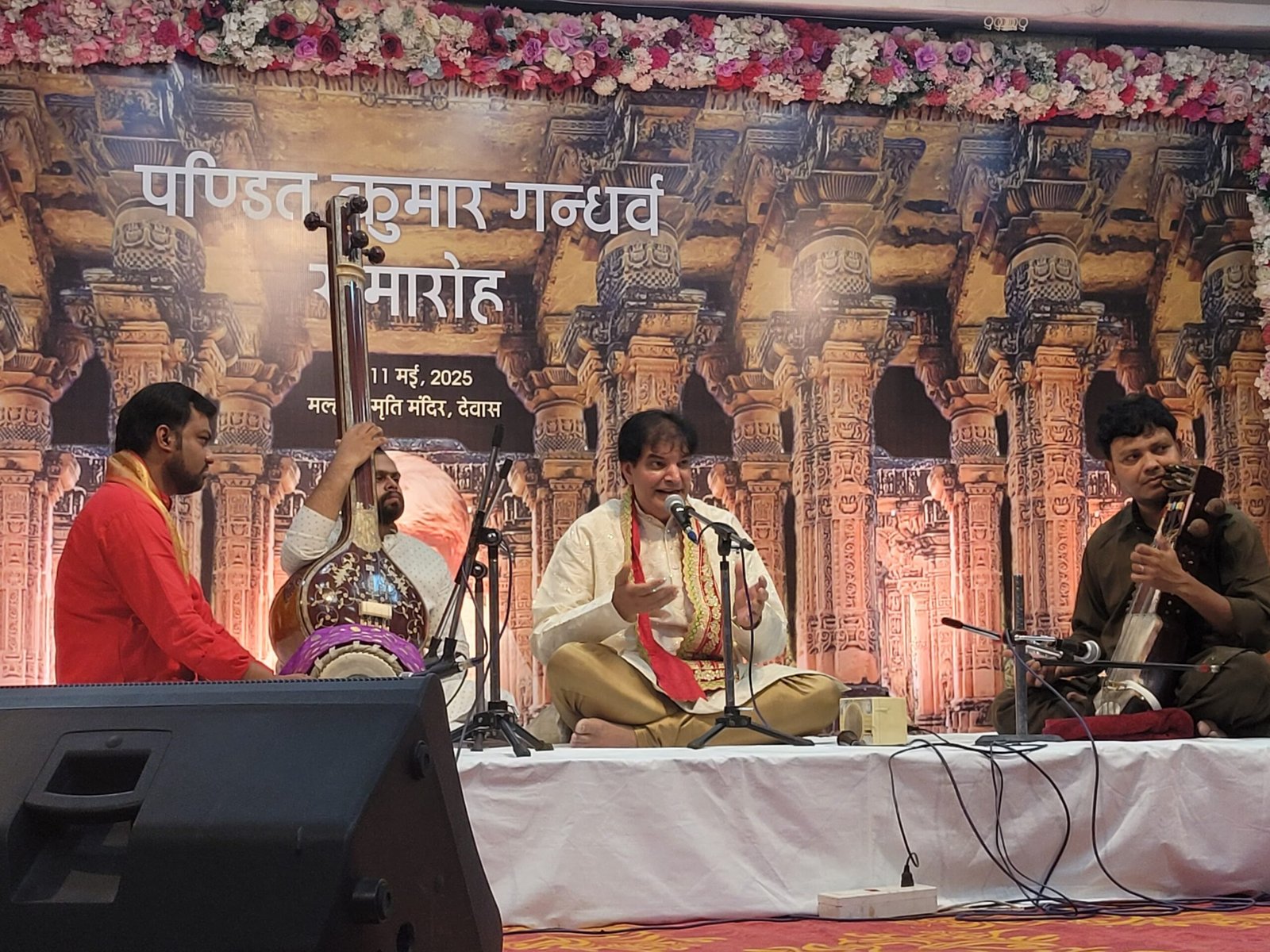
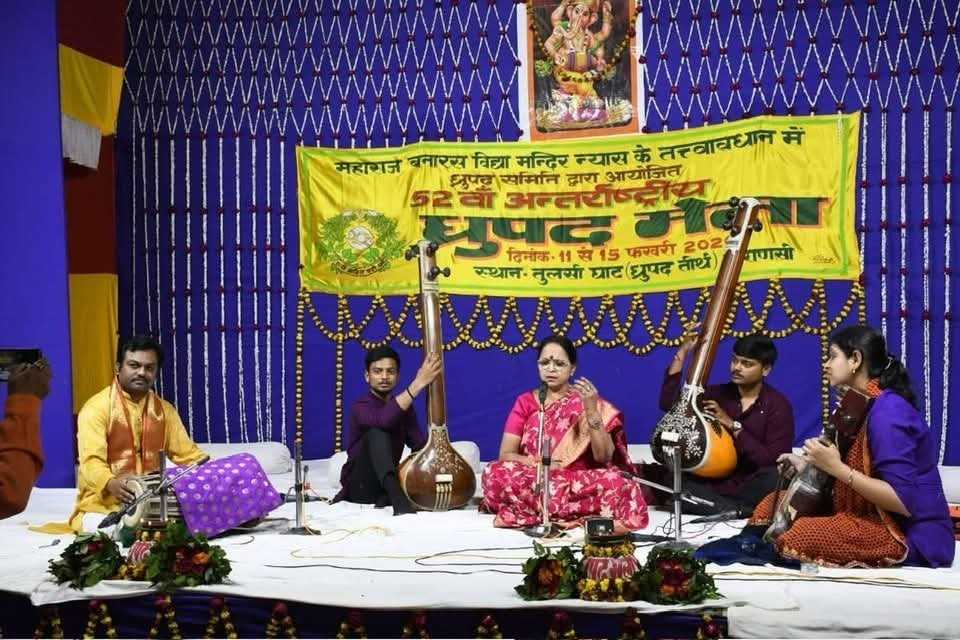
Dr. Parikh has performed at India’s most prestigious platforms, including:
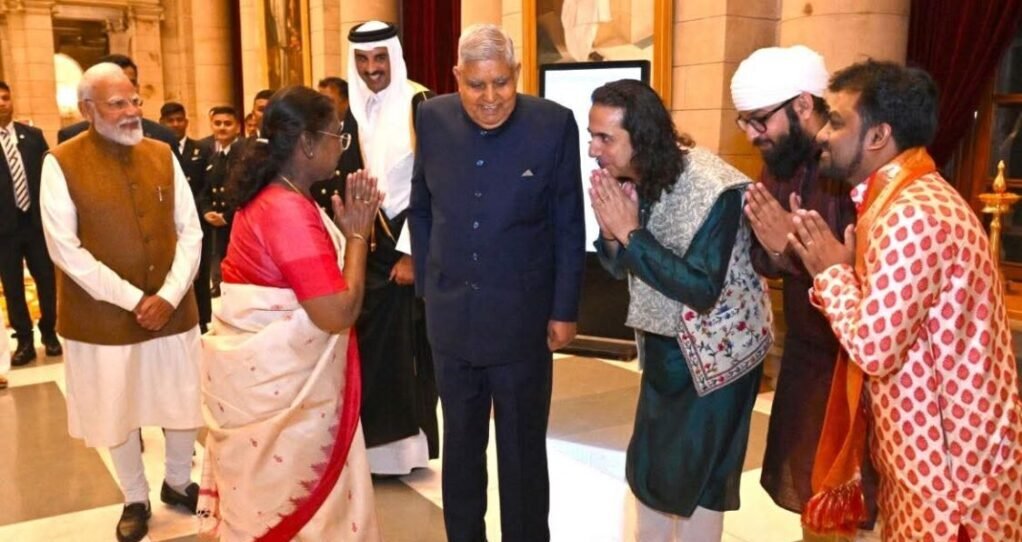
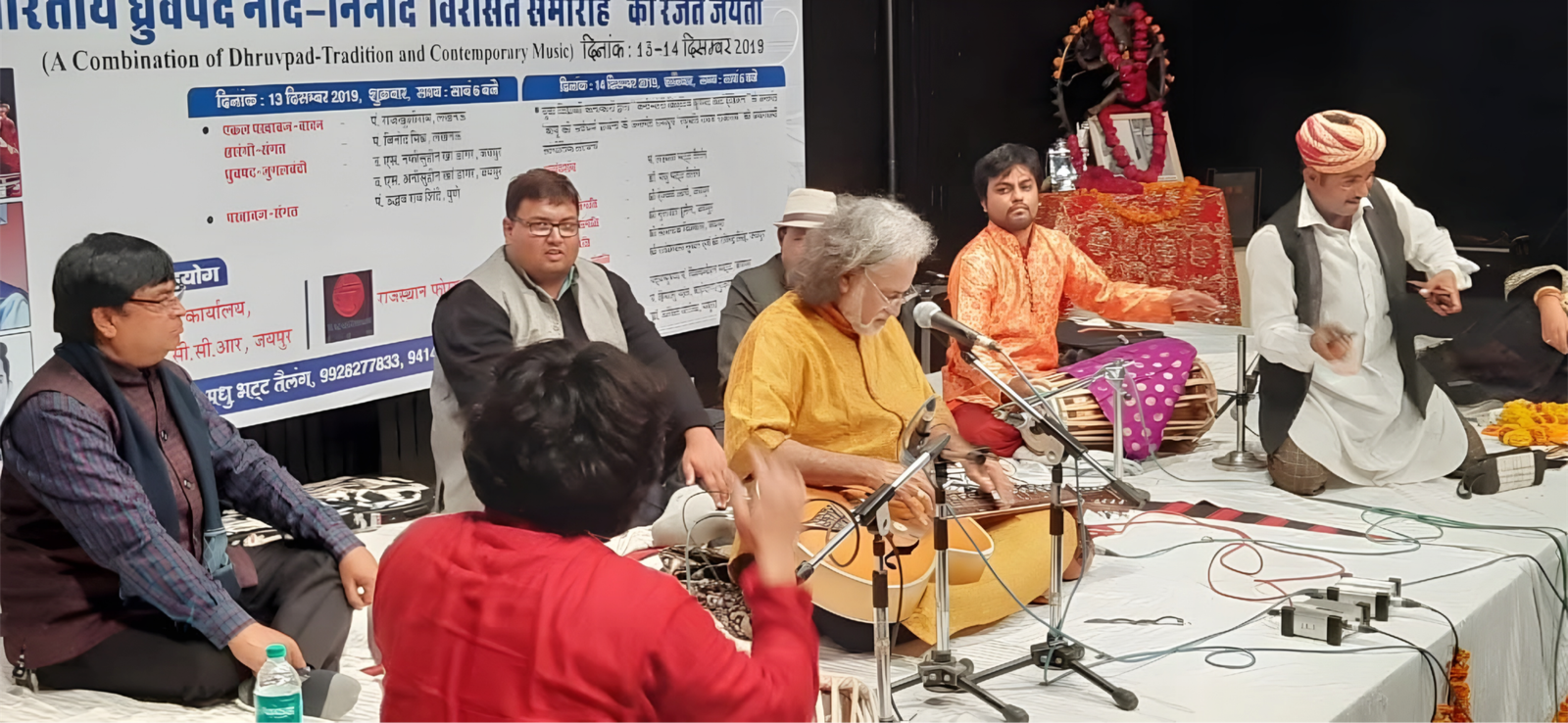
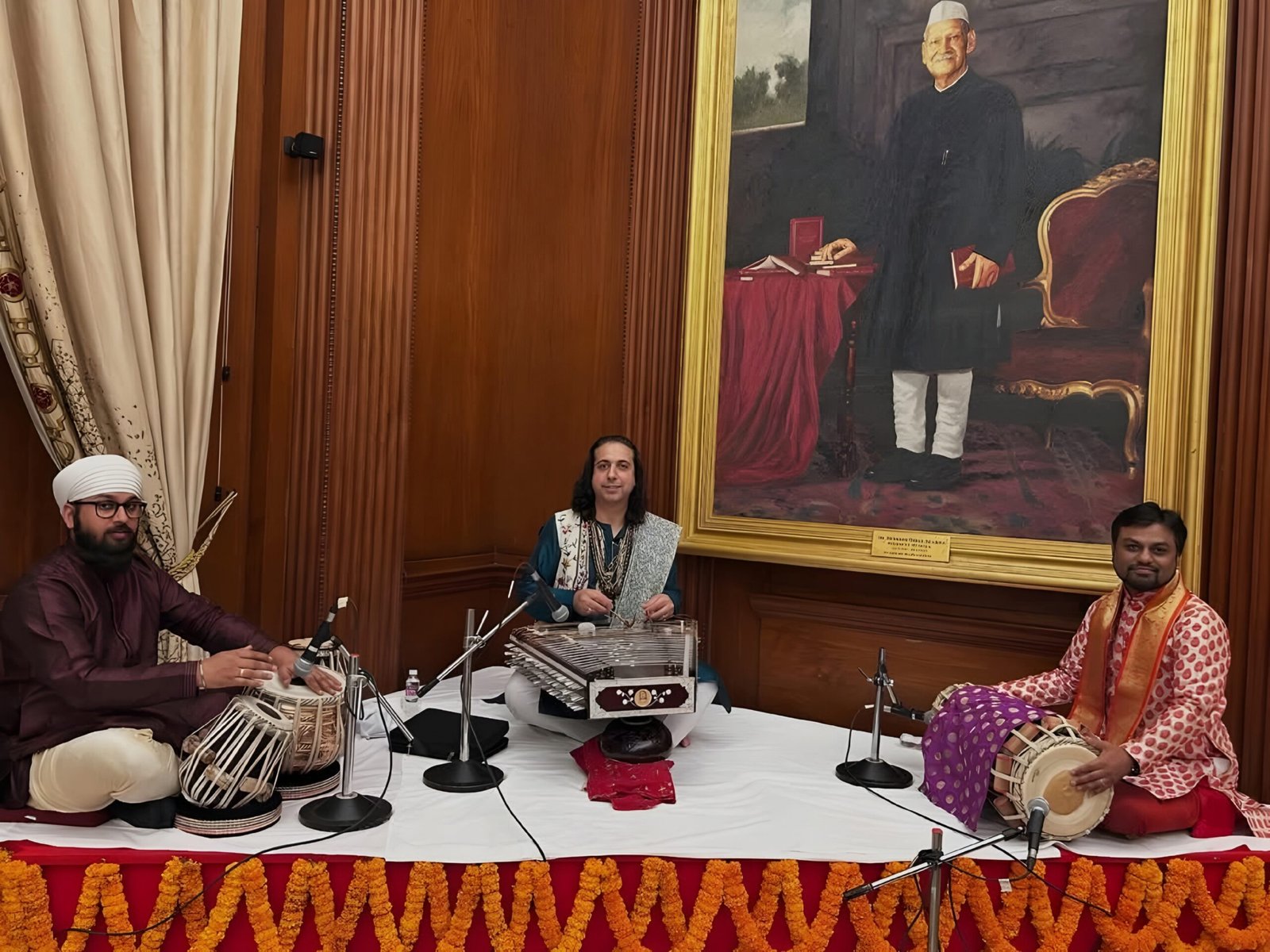
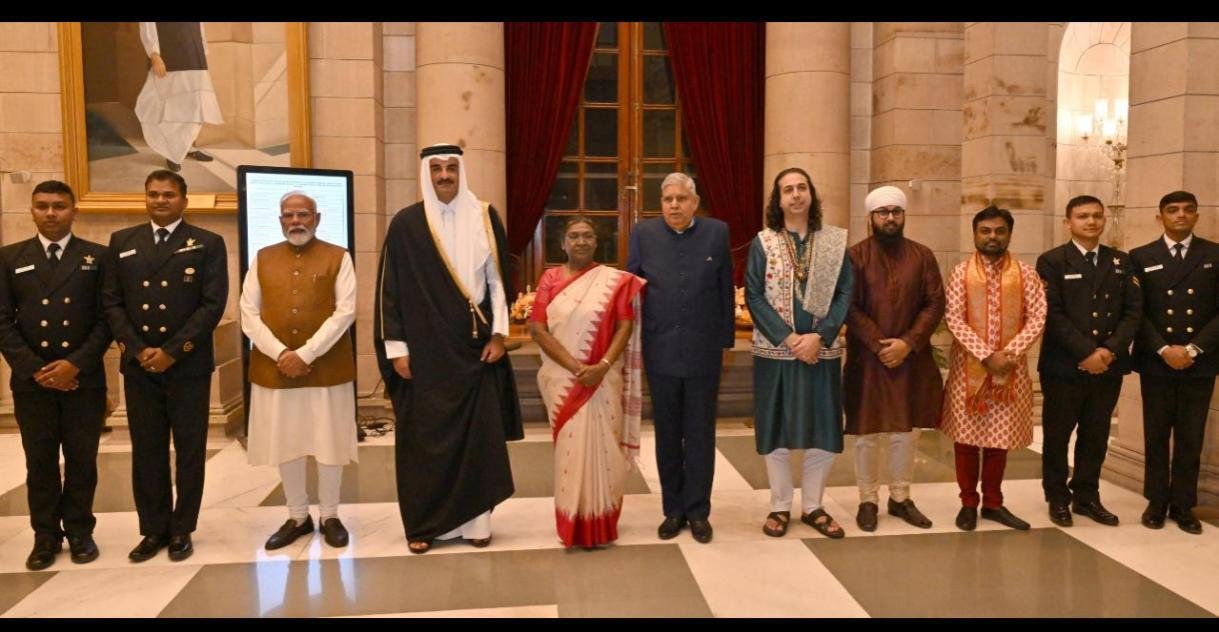
- Rashtrapati Bhawan, New Delhi
- G20 Summit
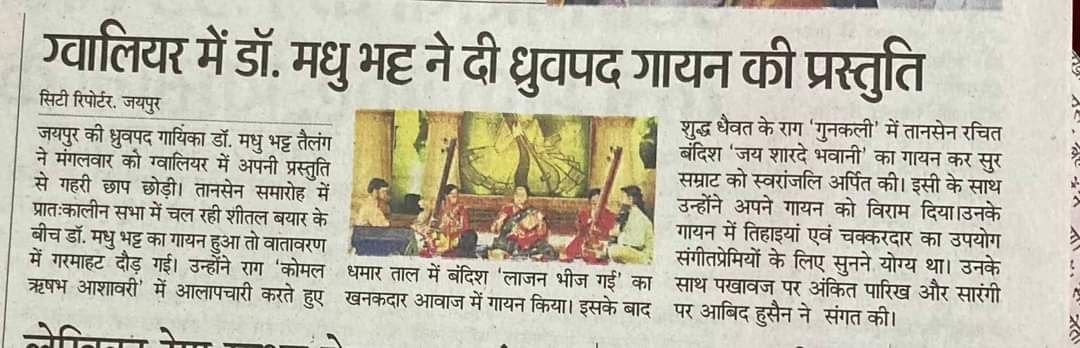
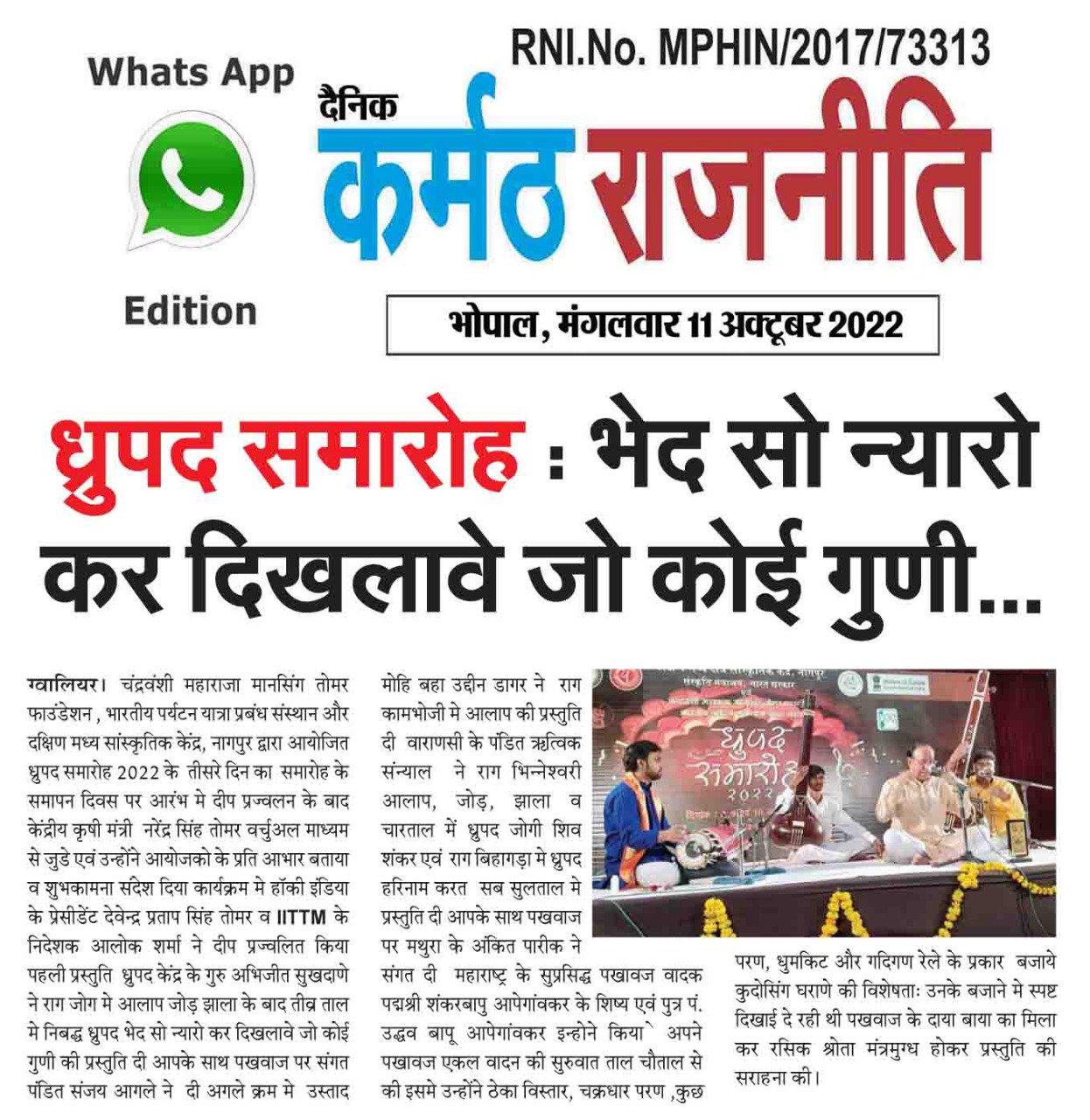
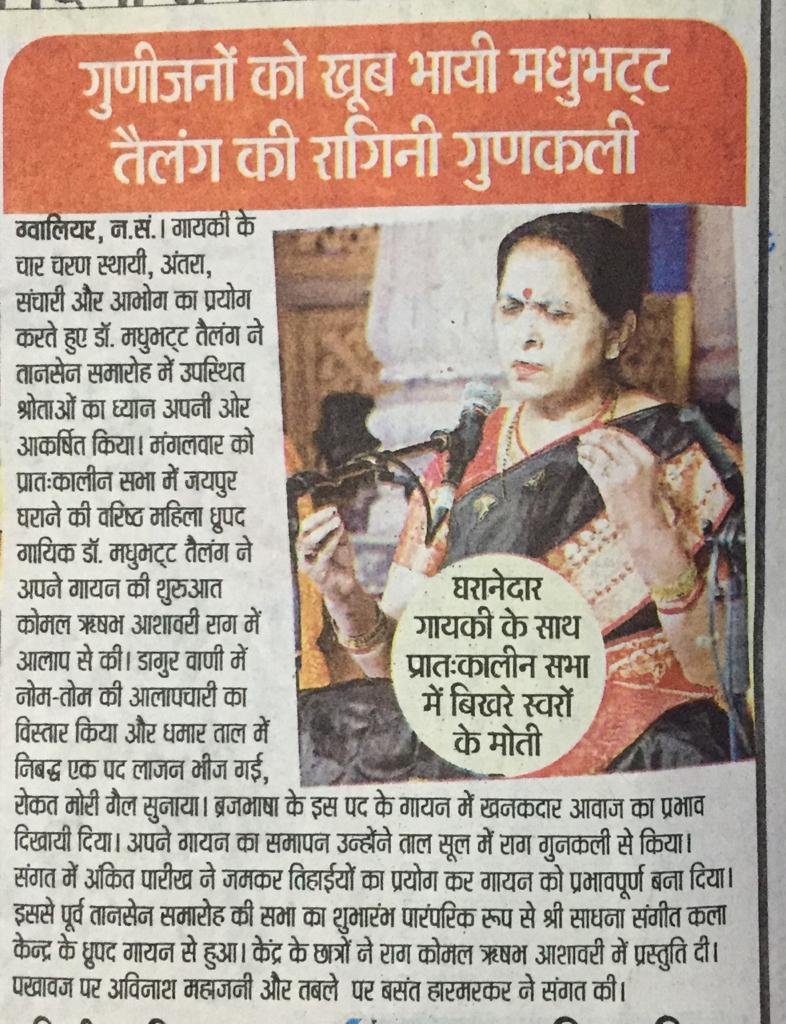
- Tansen Samaroh, Gwalior
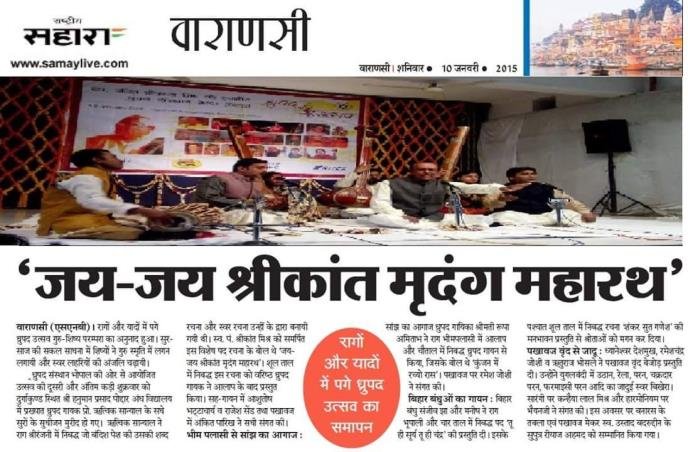
- Sankat Mochan Sangeet Samaroh, Varanasi
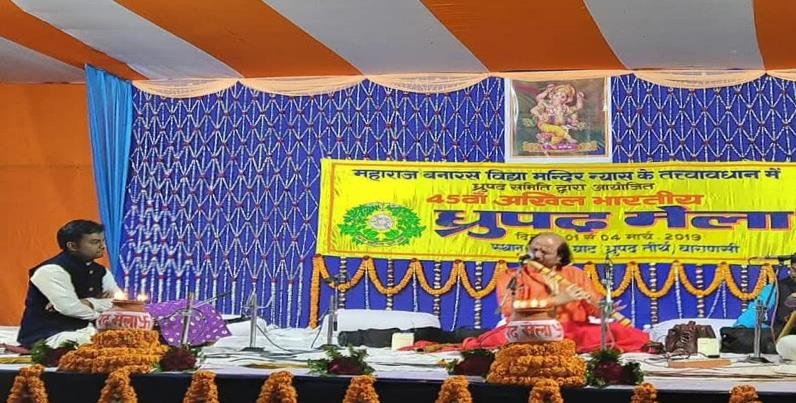
- Dhrupad Mela, Varanasi
- Harivallabh Sangeet Samaroh, Jalandhar
- NCPA Promising Artistes Series, Mumbai
- Bangalore International Centre
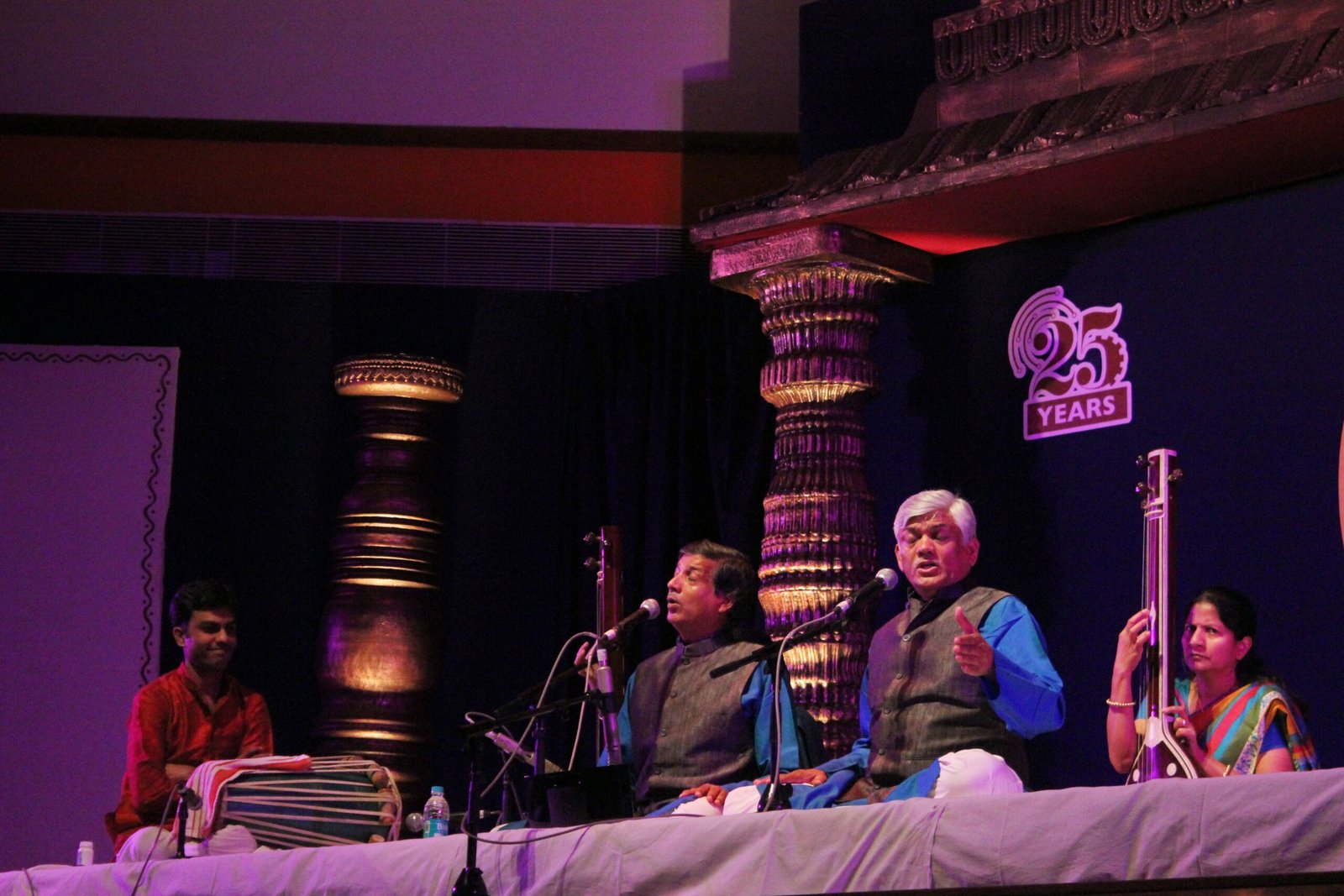
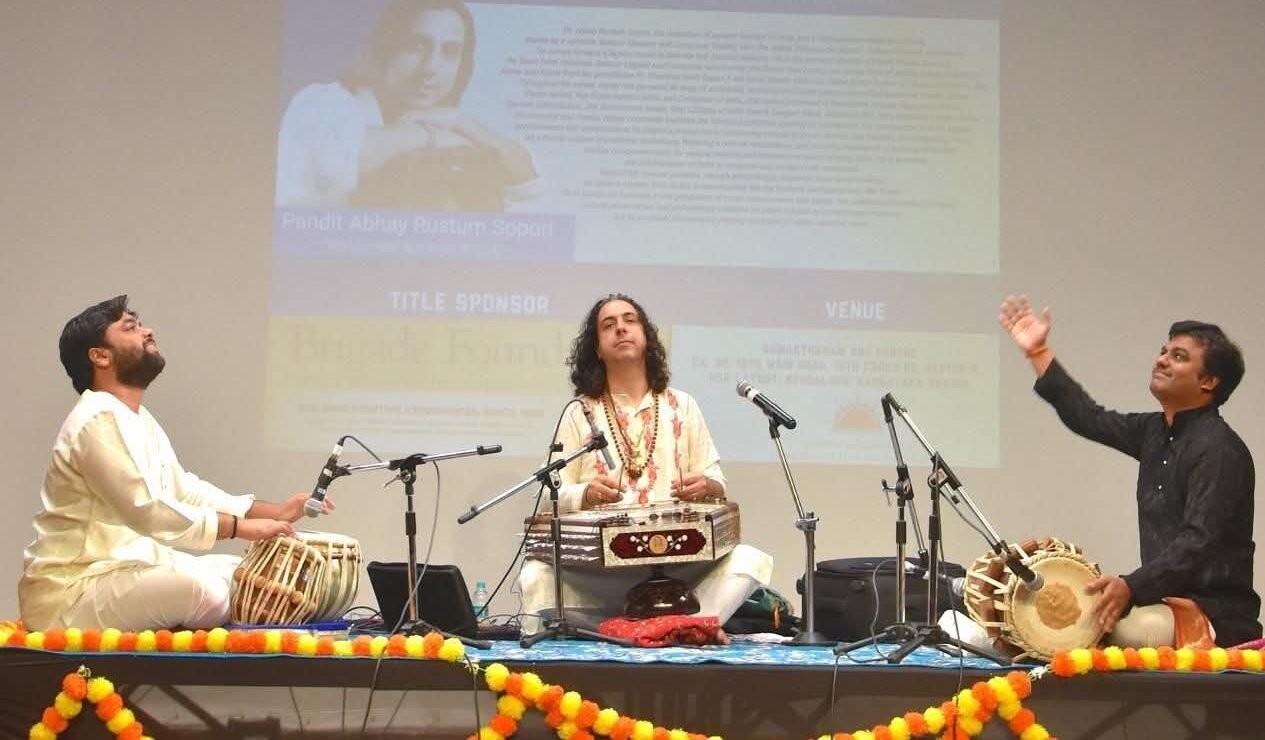
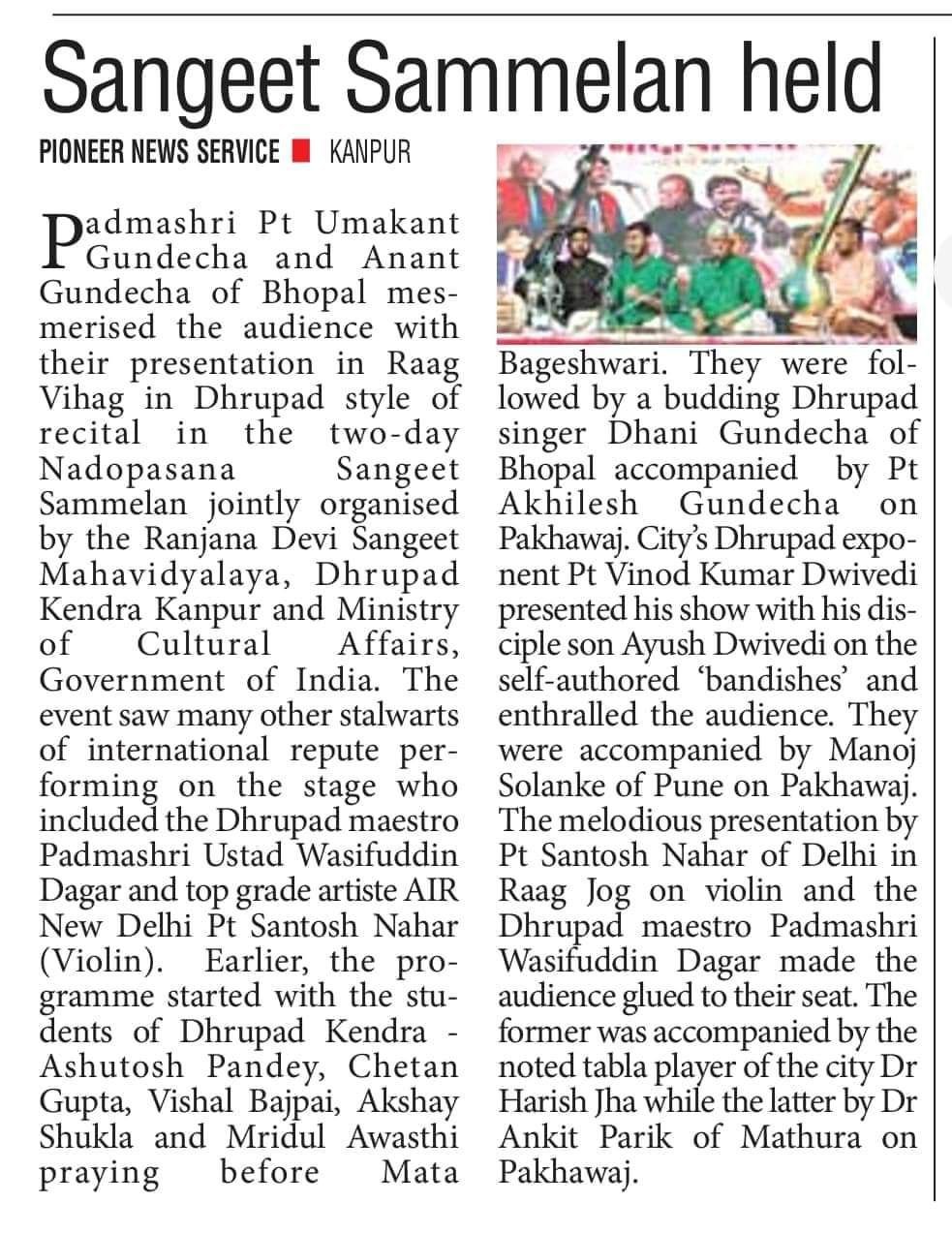
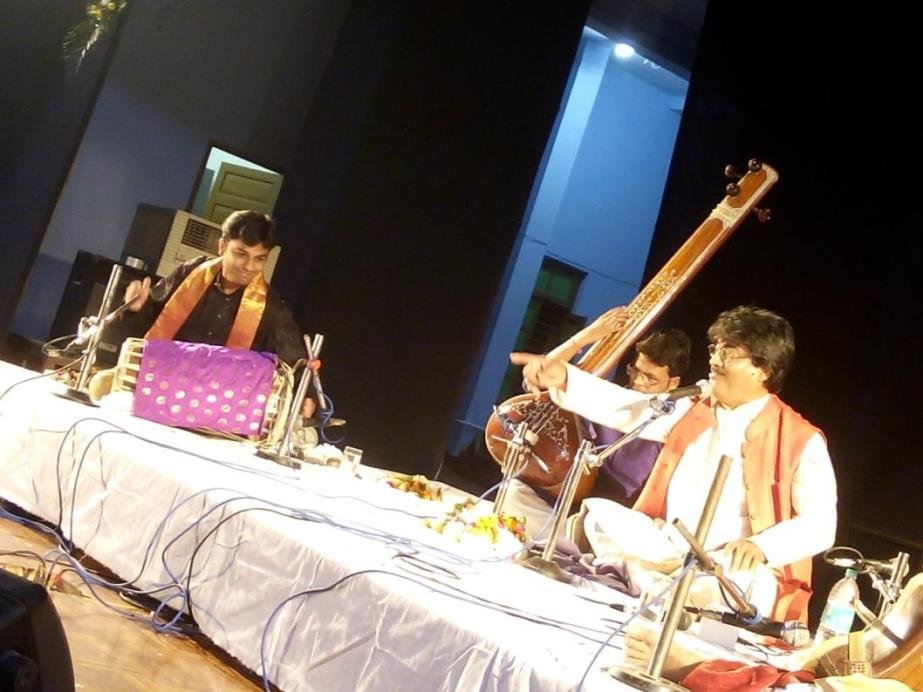
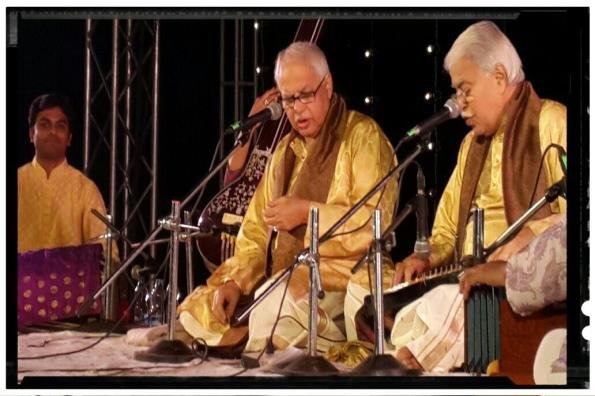
He has accompanied some of India’s greatest musicians, including Pt. Rajan & Sajan Mishra, Pt. Vishwamohan Bhatt, Pt. Gundecha Brothers, Ustad Wasifuddin Dagar, Pt. Ritwik Sanyal, and Pt. Abhay Sopori.
Awards
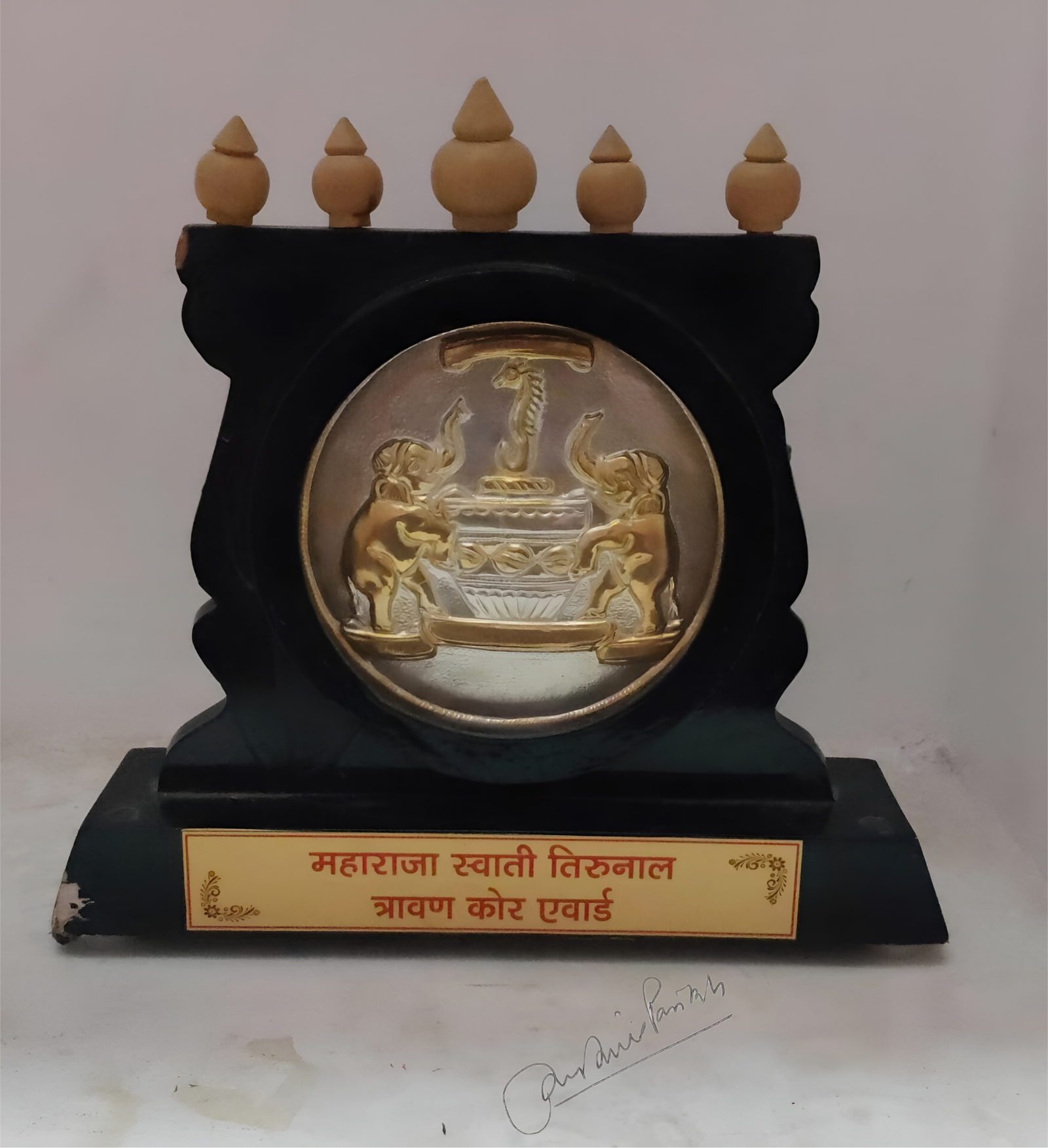
- Swati Tirunal Award 2020
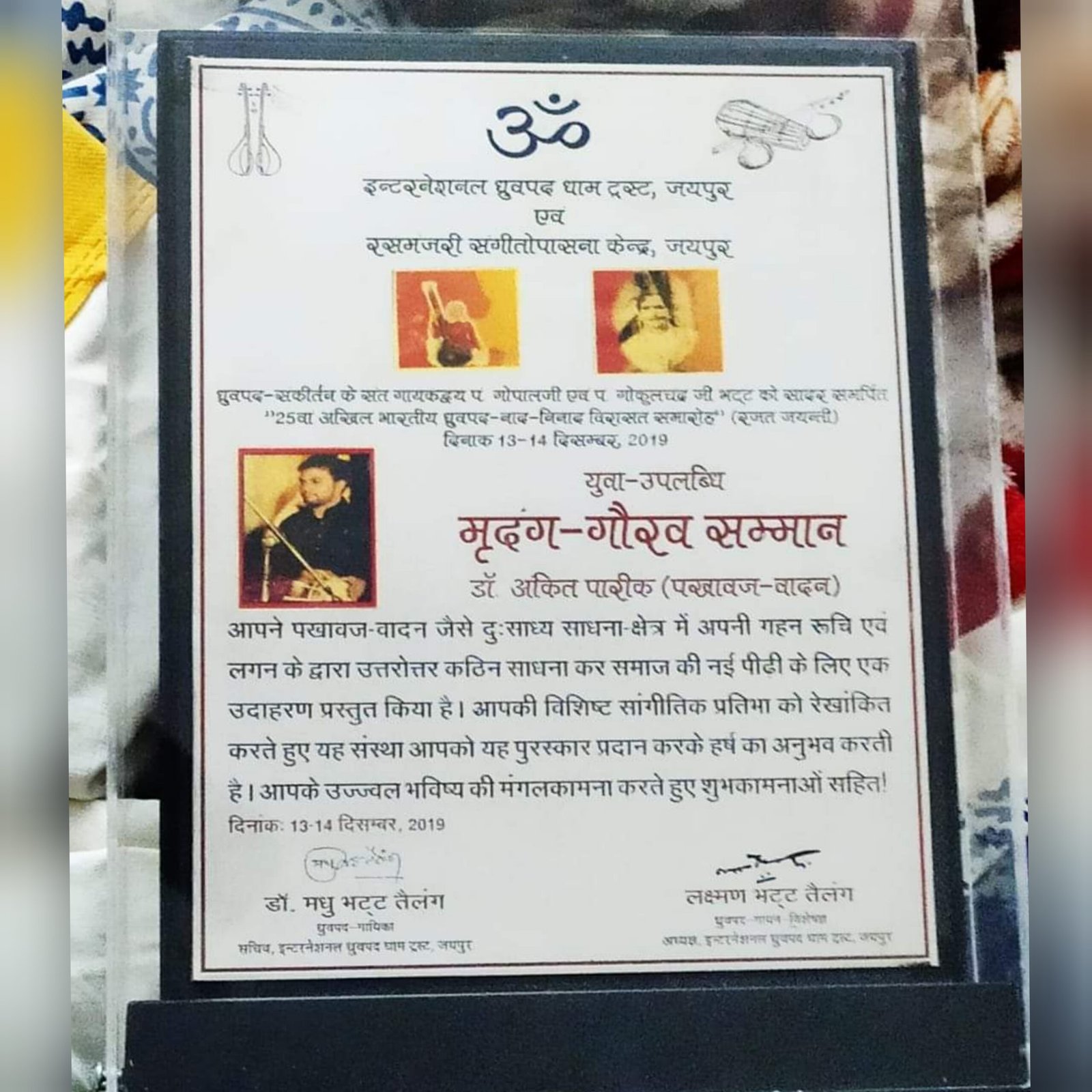
- Mridang Gaurav Puraskar 2019
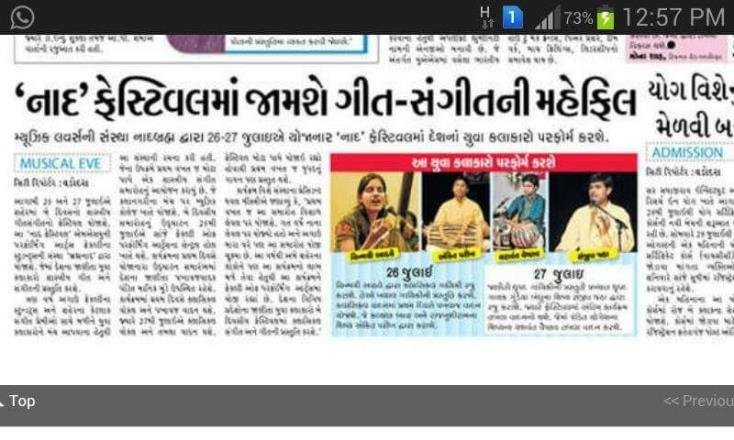
- Girnar Ratna 2017
- Talmani Award 2010
How to Learn Pakhawaj Online
The good news is that you no longer need to be in Varanasi or Mathura to learn from a great teacher. Online Pakhawaj classes have made it possible for students worldwide to learn under the Guru-Shishya Parampara.
Dr. Ankit Parikh offers structured online learning batches for students at all levels:
Beginner Batch
Start from the basics — Pakhawaj alphabets (bols), hand positioning, basic Thekas in Teentaal, Ektal, and Jhaptaal. No prior musical experience required.
Intermediate Batch
Deepen your understanding with advanced bols, Vilambit and Drut Laya compositions, Stuti Parans, Layakari techniques, and accompaniment basics.
Advanced / Performance Batch
For serious practitioners — Chakradhar compositions, Gharana-specific styles, solo recital preparation, and professional accompaniment training.
Each batch includes weekly 1-on-1 live sessions, practice recordings, and personalized feedback. Students from India, the USA, UK, and other countries are currently learning under this program.
Student Testimonials
“Learning Pakhawaj under Dr. Ankit Parikh has been a spiritual journey. His patience and depth of knowledge in the Nana Panse Gharana are truly inspiring for any serious seeker of music.” — Nishant Sharma, Delhi
“Even in online classes, Ankit Sir ensures that every stroke is perfect. His focus on ‘Nikaas’ (tonal quality) has completely transformed my understanding of the instrument.” — Nikhil Patel, Arizona, USA
“The way Dr. Parikh explains complex ‘Parans’ and ‘Chakkardars’ makes them so accessible. He doesn’t just teach rhythm; he teaches the soul of the Pakhawaj.” — Anurag Srivastav, England, UK
Frequently Asked Questions
Can I learn Pakhawaj online?
Yes. With video calling technology and structured lesson plans, online Pakhawaj classes are highly effective. Dr. Parikh’s students across the world learn successfully through weekly live sessions.
Do I need prior musical experience?
No. The beginner batch is designed for complete newcomers. You will start from the very basics — hand positioning, basic bols, and simple rhythms.
How long does it take to learn Pakhawaj?
Basic proficiency typically takes 1-2 years of regular practice. Advanced performance-level playing can take 5-10 years, depending on your dedication and practice hours.
What is the difference between Pakhawaj and Tabla?
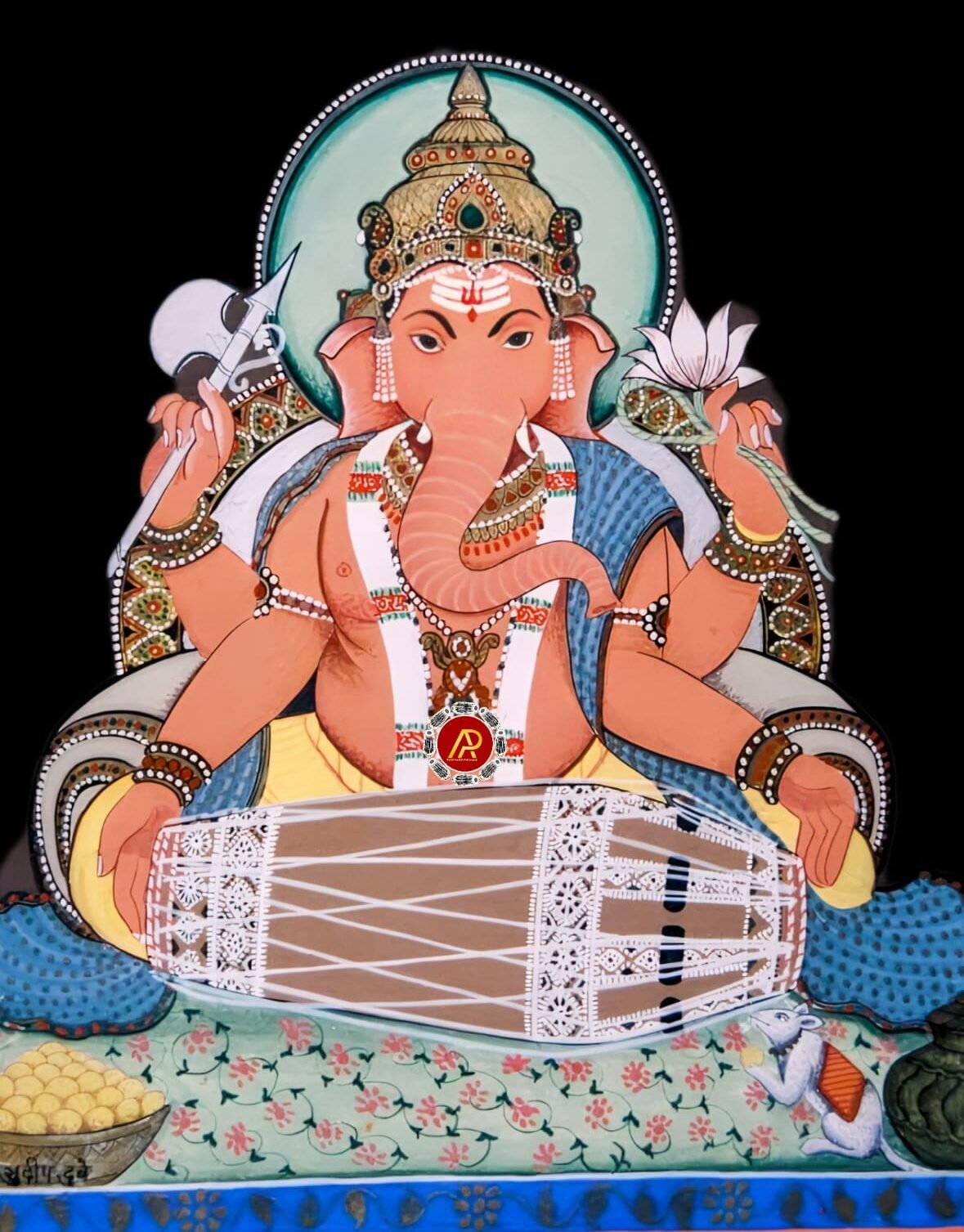
The Pakhawaj is an older, barrel-shaped drum used primarily in Dhrupad and Haveli Sangeet. The Tabla evolved from the Pakhawaj and is used in Khayal, Thumri, and lighter genres. The Pakhawaj has a deeper, more resonant sound and is considered the “ancestor of the Tabla.”
What Gharana does Dr. Parikh teach?
Dr. Parikh teaches the Nana Panse Gharana tradition, with elements of the Nathdwara and Avadhi Gharanas. This synthesis offers students a comprehensive understanding of Pakhawaj across multiple traditions.
Enroll Today
If you are serious about learning Pakhawaj from one of India’s finest teachers, now is the time to begin. Dr. Ankit Parikh’s structured learning program offers the perfect blend of traditional Guru-Shishya teaching with the convenience of modern technology.
Limited seats available per batch.
Phone: +91 9696 542226 | Email: a.parikh42@gmail.com
About Dr. Ankit Parikh
Dr. Ankit Parikh is a distinguished Pakhawaj artist of the Nana Panse Gharana, born in Varanasi and based in Mathura. He holds a Ph.D. in Music from Banaras Hindu University and is an empanelled artist of ICCR and a graded artist of All India Radio. He has performed at India’s most prestigious festivals and has accompanied legendary musicians across the country.
As a teacher, he is committed to preserving the authentic Pakhawaj tradition while making it accessible to students worldwide through online classes.
Website: ankitparikhpakhawaj.com
YouTube: youtube.com/@ankitparikhpakhawaj28
Instagram: @ankit.sangit.parikh